


From multiple Anthropic launches to the Chinese robot that humiliated the world half-marathon record: Anthropic swallowed the design market, Grok released its voice APIs.
I’ve filtered out the noise for you
1. Claude Opus 4.7: the upgrade that feels like a downgrade for many
Anthropic released Opus 4.7 on April 16 with real improvements in coding (SWE-bench Pro +11 points; CursorBench went from 58% to 70%) and three times sharper vision. But it brought two serious regressions: the MRCR benchmark for long-context retrieval dropped from 78.3% to 32.2%, and the new tokenizer consumes between 1.0x and 1.35x more tokens for the same input.
Why it matters: Same pricing table, but up to 35% more tokens per prompt: it’s a silent price increase that’s already making Claude Code users on Pro and Max plans hit their weekly limits much faster.
2. Claude Design: Anthropic enters the $60B design market
Two days after Opus 4.7, Anthropic launched Claude Design: a tool that converts prompts into interactive prototypes, slides, mockups, and landing pages, automatically applying your own design system.
Why it matters: Anthropic is attacking Figma (80-90% market share in UX), Canva, and the entire cohort of vibe coding tools.
3. Grok opens its voice APIs: STT and TTS standalone with aggressive pricing
xAI released standalone Speech-to-Text and Text-to-Speech APIs on April 17, with support for 25+ languages, word-level timestamps, and 5 expressive voices. Pricing: STT at $0.10/hour in batch or $0.20/hour in streaming; TTS at $4.20 per million characters.
Why it matters: Pricing is below Deepgram and ElevenLabs while the product matches or exceeds them on several accuracy benchmarks.

4. Stanford AI Index 2026: adoption isn’t slowing down, it’s accelerating
Stanford published the 2026 AI Index this week: enterprise adoption reached 88%, 4 out of 5 university students use GenAI, and generative AI reached 53% population penetration in just three years.
Why it matters: The estimated value of GenAI tools for American consumers reached $172B annually, with the median per-user value tripling between 2025 and 2026.
5. A Chinese humanoid robot ran the Beijing half-marathon in 50 minutes
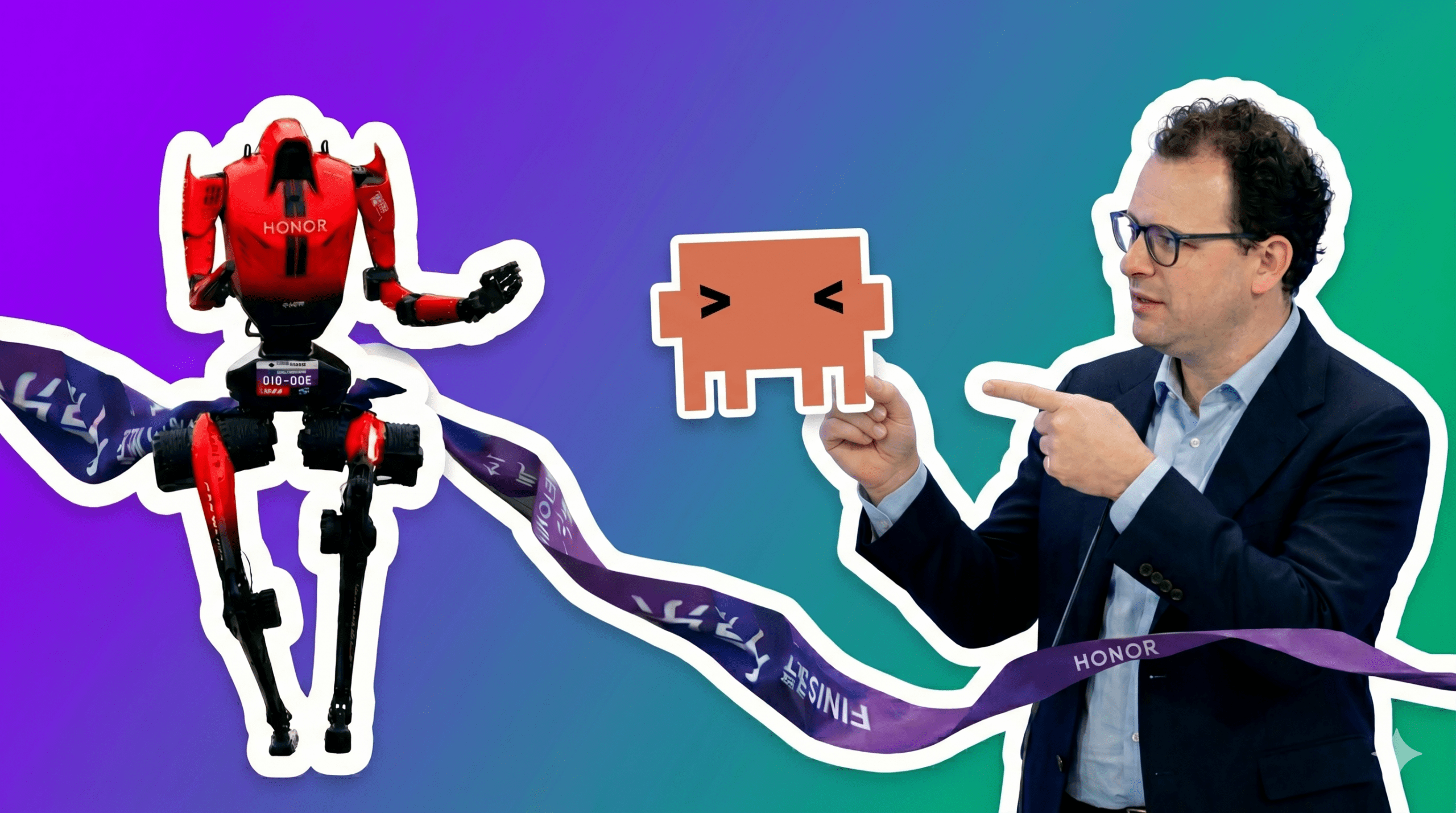
Lightning, a 169cm humanoid robot built by Honor, won the Beijing half-marathon on April 19 with a time of 50:26, nearly 7 minutes below the human world record.
Why it matters: Last year the winning robot took 2 hours 40 minutes and only 6 of 21 robots reached the finish line. The Chinese government just committed a state fund of ~$138B for humanoids.
Bonus: Content of the Week
Jensen Huang, Nvidia’s founder, appeared on Dwarkesh Patel’s podcast. Dwarkesh is famous for asking very deep questions to his guests. The conversation unsettled Jensen especially on the topic of whether they should sell chips in China.