



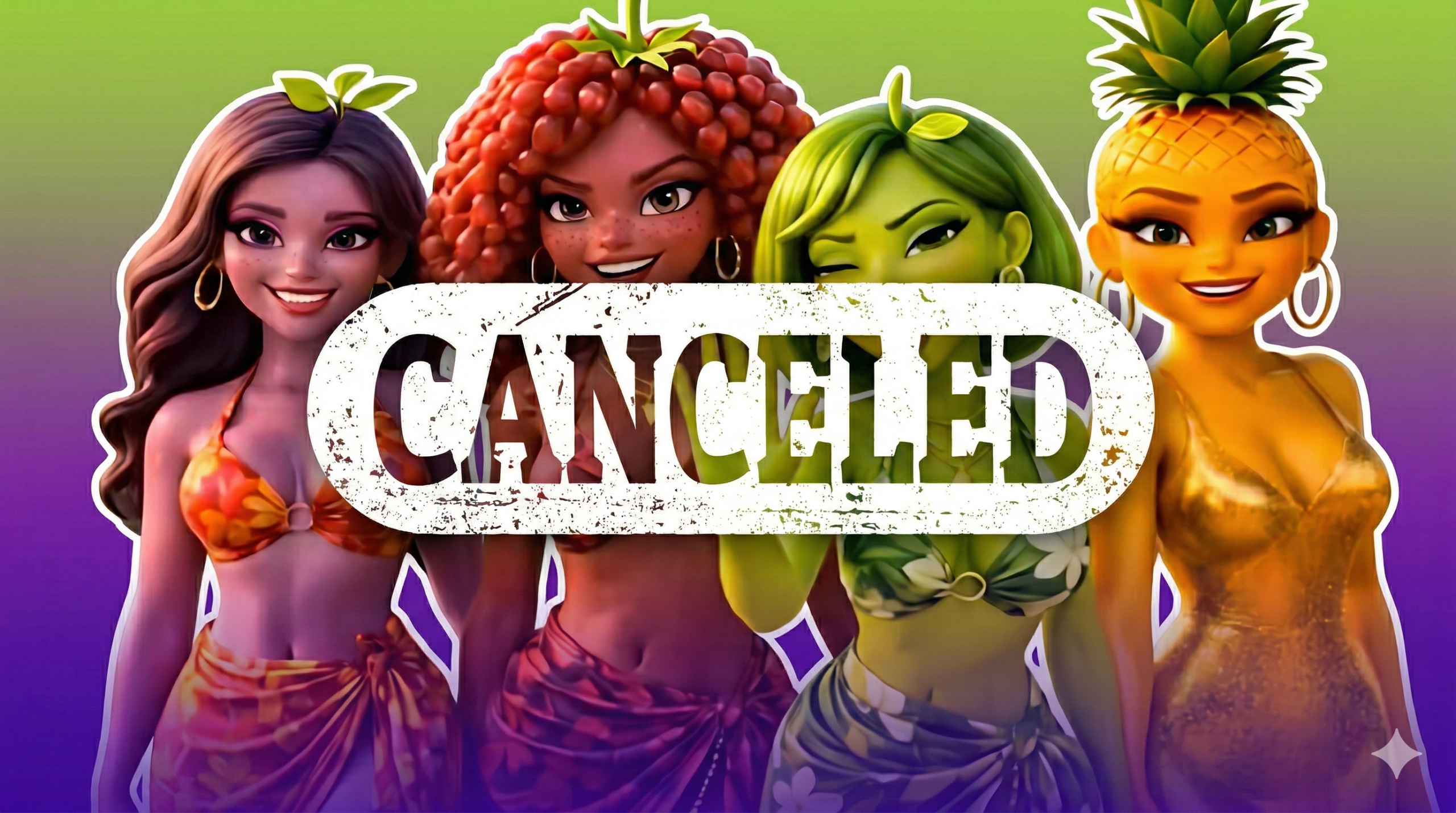
In late March 2026, an account called Fruit Love Island became one of the fastest viral phenomena in TikTok’s history, accumulating 300 million views and 3.3 million followers in just ten days. The series featured anthropomorphic fruits competing in a romance reality show format: Bananito, a talking banana, vied for attention alongside characters named Bluebella, Strawberina, and Grapenzo in a fictional villa modeled after Love Island USA. Every episode was generated entirely by artificial intelligence.
Then TikTok deleted the account, classifying the content as “low-quality AI.”
The decision sparked immediate debate. On one side, the platform’s content moderation team argued that AI-generated content of this nature didn’t meet quality standards and posed risks related to inauthentic engagement. On the other, creators and observers pointed out that Fruit Love Island’s engagement metrics suggested audiences found the content anything but low-quality. The audience had spoken, and TikTok overruled them.
The creation process behind Frutinovelas is noteworthy for its accessibility. The series was produced using AI tools available on mobile devices, requiring no professional animation software, no voice actors, and no production budget worth mentioning. Short episodes were published daily, with audience interaction driving plot development through comments and voting. The format was simple, repeatable, and almost infinitely scalable. It was, in effect, a proof of concept for a new kind of content creation: zero human labor, maximum engagement.
The speed and scale of the copycat response proved that deleting the original account was a futile gesture. Hundreds of imitation accounts appeared almost immediately across TikTok and other platforms, reproducing the format with minor variations. Some swapped fruits for vegetables. Others changed the romance reality setting to a cooking competition or talent show. The underlying formula (AI-generated anthropomorphic characters in episodic drama) proved robust enough to survive the removal of its originator.
This presents a genuine challenge for content platforms. TikTok’s moderation framework was designed for a world where humans create content and other humans review it. When a single person with a phone can generate an entire serialized show in hours, the volume of content overwhelms traditional review processes. The “low-quality AI” classification that TikTok applied to Frutinovelas raises an obvious question: who defines quality, and by what standard? If 300 million views in ten days isn’t evidence of quality by audience standards, what is?
The controversy also highlighted concerns about human creator displacement. Traditional animators, voice actors, and content creators saw Frutinovelas as a glimpse of a future where their skills become irrelevant. If an AI-generated series can outperform human-made content in engagement metrics at a fraction of the cost, the economic logic is difficult to argue against, even if the cultural implications are troubling.

Critics also raised questions about the nature of the engagement itself. Were 300 million views driven by genuine audience interest, or by algorithmic amplification of novel content? TikTok’s recommendation algorithm is known to boost unusual or attention-grabbing formats, and AI-generated talking fruits certainly qualify. The question of whether synthetic content receives an unfair algorithmic advantage over human-created content is one that platforms have barely begun to address.
Environmental concerns added another dimension to the debate. Generative AI tools consume significant computational resources, and producing daily episodes of an AI-animated series, multiplied across hundreds of copycat accounts, creates a non-trivial energy footprint. As AI content generation scales, the environmental cost of entertaining audiences with synthetic media becomes a legitimate policy question.
Fruit Love Island may have been deleted, but what it demonstrated cannot be undone. The attention economy no longer requires human creators to produce content that humans will watch compulsively. The tools are accessible, the formats are proven, and the barriers to entry are effectively zero. TikTok can delete accounts, but it cannot delete the capability.


