 English


 Español
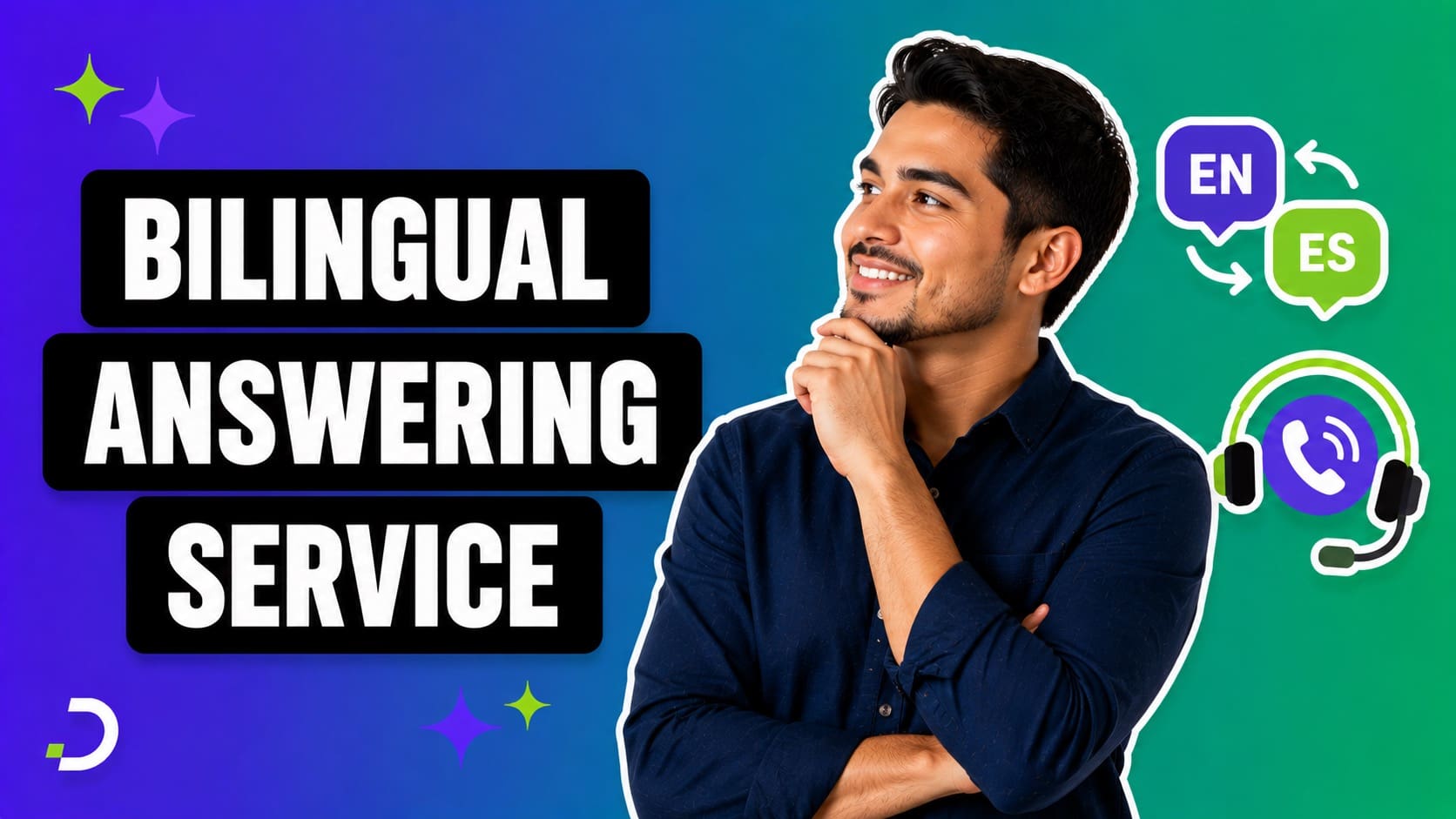
More than 42 million people in the United States speak Spanish at home, according to the US Census Bureau (Census). That is a huge pool of customers. Now ask yourself a hard question. What happens when one of them calls your business and reaches a voicemail in English only? Usually, they hang up and call a competitor who speaks their language. A bilingual answering service closes that gap. It answers every caller in English or Spanish, instantly, so you stop losing business to a language barrier.
This guide shows how a bilingual answering service works, which businesses need one most, and how to set one up without hiring a second front desk.
How to choose a bilingual answering service
Not every service is truly bilingual. Some just bolt a “press 2 for Spanish” menu onto an English system. Before you commit, run through this checklist:
- Automatic language detection. The agent should pick the language from the caller’s first words, with no menu to press.
- Natural Spanish. Ask for a Spanish demo and listen closely. The accent should sound human, not like a translation app.
- Mid-call switching. Confirm it can follow a caller who moves between languages.
- Real integrations. It should connect to your CRM, calendar, and phone system.
- Usage based pricing. You should pay for calls handled, not a surcharge for each language.
Get those five right, and the service will earn its keep from the first week.
How to set up a bilingual answering service with Dapta
Setup is quick because you are not hiring anyone. With Dapta, you build a bilingual AI agent using no code, and it goes live in days. You choose the greeting, the questions, and how calls get routed.
What makes the Dapta bilingual answering service stand out:
- Natural English and Spanish in one agent, with regional accents callers recognize.
- Automatic language detection, so callers never press a button or wait for a transfer.
- No-code setup, so you shape every part of the conversation without a developer.
- Real integrations with your CRM, calendar, and phone system, so bilingual leads land where your team already works.
Because pricing is usage based, you pay for the calls you handle, not a fixed salary in each language. Your Spanish-speaking callers get a real conversation, and you get every lead you used to lose.
Frequently asked questions
Does the Spanish sound natural, or robotic?
It sounds natural. A modern bilingual answering service uses lifelike voices, not the flat text-to-speech of a decade ago. With Dapta, you can also pick regional accents so the voice matches your customers.
Can it switch languages in the middle of a call?
Yes. If a caller moves from English to Spanish, the agent follows and keeps the conversation flowing. Callers do not have to restart or ask for a different line.
How does it compare to hiring bilingual staff on cost?
It costs far less. A bilingual hire runs $3,000 or more a month for business hours only. A bilingual answering service runs $50 to $300 a month and covers both languages 24/7.
Which languages can it handle?
English and Spanish are the core pair for US businesses. Many providers, including Dapta, support more languages, so ask about the ones your customers speak.
How fast can a bilingual answering service go live?
Often within a few days. Because there is no one to hire or train, setup means connecting your number, calendar, and CRM, then testing a few calls in both languages.
Do callers know they are talking to AI?
You decide. Many businesses let the agent introduce itself as a virtual assistant. Either way, callers care most that they are understood in their language and helped quickly, which a bilingual answering service delivers.
Will it replace my bilingual employees?
No, it supports them. The agent covers overflow, after-hours, and repeat questions in both languages, so your bilingual staff focus on the calls that need a human touch.
For the full picture, explore our related guides:


