


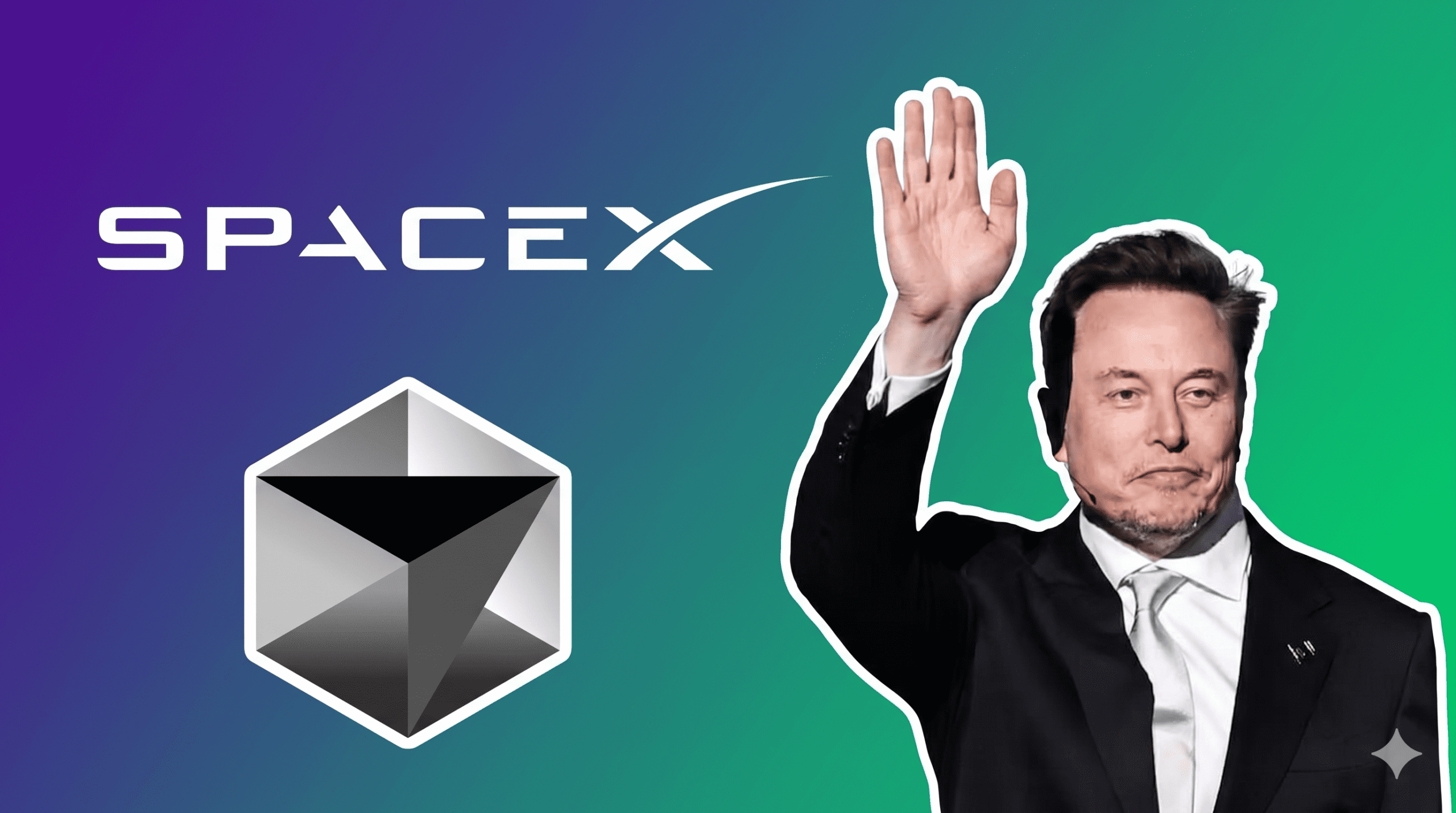
In one of the most unusual deal structures of the AI era, SpaceX announced on April 21, 2026 that it has secured an option to acquire Cursor, the AI coding startup, for $60 billion later this year. If SpaceX decides not to exercise that option, it will still pay $10 billion to Cursor for ongoing collaboration on coding and knowledge work AI. The arrangement effectively preempted a $2 billion fundraise Cursor was planning, replacing it with what is functionally a guaranteed buyer at a premium price. For an AI coding tool that was valued at just $2.5 billion in January 2025, the trajectory has been almost unprecedented.
Cursor’s parent company Anysphere was founded in 2022 by four MIT students who left school to work full time on AI coding tools. CEO Michael Truell, now 25 years old, was an MIT dropout who interned at Google at age 18 working on language models for feed ranking. Truell and his three co-founders, Aman Sanger, Sualeh Asif, and Arvid Lunnemark, built what has become the dominant AI coding interface among professional developers. Truell’s personal net worth is now approximately $1.3 billion, making him one of the youngest self-made billionaires in tech history.
The valuation timeline tells the story of how quickly AI distribution has become more valuable than AI capability. Cursor was worth $2.5 billion in January 2025. By May, the figure climbed to $9 billion. In November 2025, the company closed a Series D at a $29.3 billion post-money valuation after raising $2.3 billion. By April 2026, the company was negotiating a $50 billion round when SpaceX preempted with the $60 billion offer. That’s a 24x increase in valuation over 16 months.
The strategic logic for SpaceX is interesting. The collaboration pairs Cursor’s AI coding expertise with SpaceX’s Colossus supercomputer, the same compute infrastructure that powers xAI’s Grok models. SpaceX is delaying the actual acquisition until after its expected summer 2026 IPO, primarily because the company wants to avoid updating confidential financial filings before the listing. Once SpaceX trades publicly with a target valuation around $1.75 trillion, financing a $60 billion acquisition becomes far easier using publicly traded stock as currency.
The deeper signal here is what this deal says about where value is concentrating in AI. Foundation models from OpenAI, Anthropic, Google, and now multiple Chinese labs are converging on similar capability profiles. The differentiator is no longer who has the smartest model but who controls the interface where work actually happens. Cursor sits between developers and the underlying models, and that position is now apparently worth $60 billion.

For the broader AI coding tool market, the SpaceX deal reshapes the competitive landscape. GitHub Copilot, Cody, Codeium, and a wave of newer entrants now face a Cursor that is effectively backed by Elon Musk’s full ecosystem: Tesla compute, SpaceX’s Colossus, and xAI’s models. Whether SpaceX exercises its option or not, the $10 billion floor payment ensures Cursor has the resources to compete aggressively across product, talent, and infrastructure. For developers in LATAM and globally evaluating which AI coding tool to standardize on, Cursor’s path to durability has just been guaranteed in a way that competitors cannot easily match.
The deal also reflects a new pattern in late-stage AI startup financing. Rather than pursuing traditional venture rounds, AI companies with proven distribution can now negotiate strategic options with cash-rich tech giants who view ownership as cheaper than competition. Expect more arrangements like this as foundation model labs, hyperscalers, and platform companies scramble to lock in the application layer before the next wave of AI products consolidates further. For Cursor specifically, the message to competitors is unambiguous: the company is no longer competing for survival but for the shape of the entire AI coding category.


