



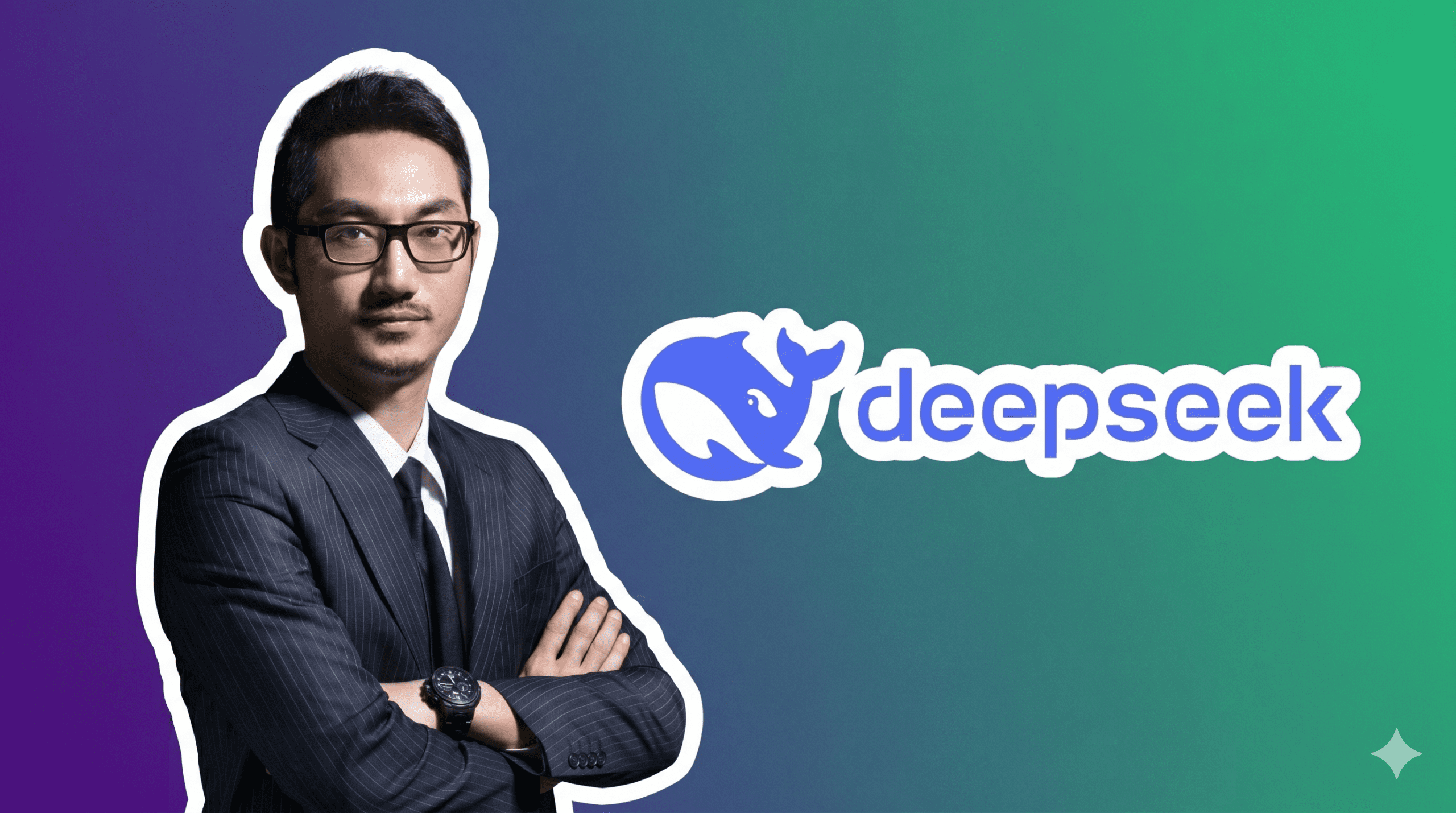
DeepSeek released V4-Pro and V4-Flash on April 24, 2026, and the model has done what DeepSeek did in early 2025 with R1: forced the entire AI industry to recalculate the price of frontier capability. V4-Pro packs 1.6 trillion total parameters with 49 billion activated per token, supports 1 million tokens of context, and scores 80.6% on SWE-Bench Verified, just 0.2 percentage points behind Claude Opus 4.6 at 80.8%. Pricing is where the announcement becomes seismic. Input tokens cost $0.145 per million, roughly 7x cheaper than GPT-5.5 or Claude Opus 4.7. Output tokens cost $1.74 per million, approximately 6x cheaper. For practical purposes, DeepSeek has matched Western frontier capability at one-sixth the cost.
The lighter V4-Flash model offers 284 billion total parameters with 13 billion activated, also supporting 1 million token context, designed for use cases that don’t require maximum reasoning depth but benefit from the same long-context capabilities and aggressive pricing. Both models are available on Hugging Face under DeepSeek’s open release strategy, meaning the weights can be downloaded, fine-tuned, and self-hosted by any organization with the compute to run them. This is the second time in roughly 18 months that DeepSeek has shipped a model that resets industry pricing expectations downward by an order of magnitude.
The technical architecture explains how DeepSeek achieves frontier capability at this cost structure. V4-Pro uses a Mixture-of-Experts design that activates only 49 billion of its 1.6 trillion parameters per token, meaning the model carries the knowledge capacity associated with a dense 1.6T model while keeping per-token inference costs comparable to a much smaller dense model. This is the same architectural trick that made GPT-4 economically viable, but DeepSeek has executed it with an aggressive 32:1 sparsity ratio that pushes the efficiency frontier further than any other published model.
The SWE-Bench Verified score of 80.6% deserves additional context. SWE-Bench Verified measures how well a model can autonomously resolve real GitHub issues from open source repositories, which is the closest available proxy for actual professional software engineering work. The fact that an open source Chinese model is now within 0.2 points of Anthropic’s flagship coding model means that the global software engineering capability frontier is no longer concentrated in U.S. labs. For enterprise customers evaluating AI coding tools, the question of which model to standardize on now includes V4-Pro as a credible option at a fraction of the cost of incumbents.

The pricing implications cascade across the entire AI economy. When a frontier-quality coding model costs $0.145 per million input tokens, the unit economics of AI coding tools shift dramatically. Companies like Cursor, Cody, and GitHub Copilot have been pricing their products against the assumption that frontier model API costs would remain in the $5 to $10 per million input token range. With V4-Pro available at one-seventh that cost, the gross margin equation for AI coding tools transforms. Either incumbents drop their pricing dramatically, or DeepSeek-powered competitors will undercut them.
For LATAM and emerging markets, DeepSeek V4 changes the practical economics of deploying AI at scale. Industries that previously could not justify per-seat AI tooling at $20 to $30 per developer per month can now consider deployments at one-fifth that cost using V4-Pro through partner APIs or self-hosted infrastructure. Local startups, regional banks, and government services in countries where IT budgets are constrained suddenly have a path to deploying frontier-grade AI without the price barriers that limited earlier waves of adoption.
The geopolitical dimension is impossible to ignore. DeepSeek has now twice taken the global capability frontier and made it accessible at Chinese cost structures, which is a strategic outcome that aligns with Beijing’s stated AI policy of broad accessibility and indigenous capability. The Stanford AI Index 2026 noted that the U.S.-China model performance gap has effectively closed. DeepSeek V4 closes the pricing gap as well. For Western AI labs, the message is that capability alone is no longer a moat. The labs that survive will need to compete on enterprise trust, integrated tooling, regulatory positioning, and developer experience rather than benchmark scores.


