

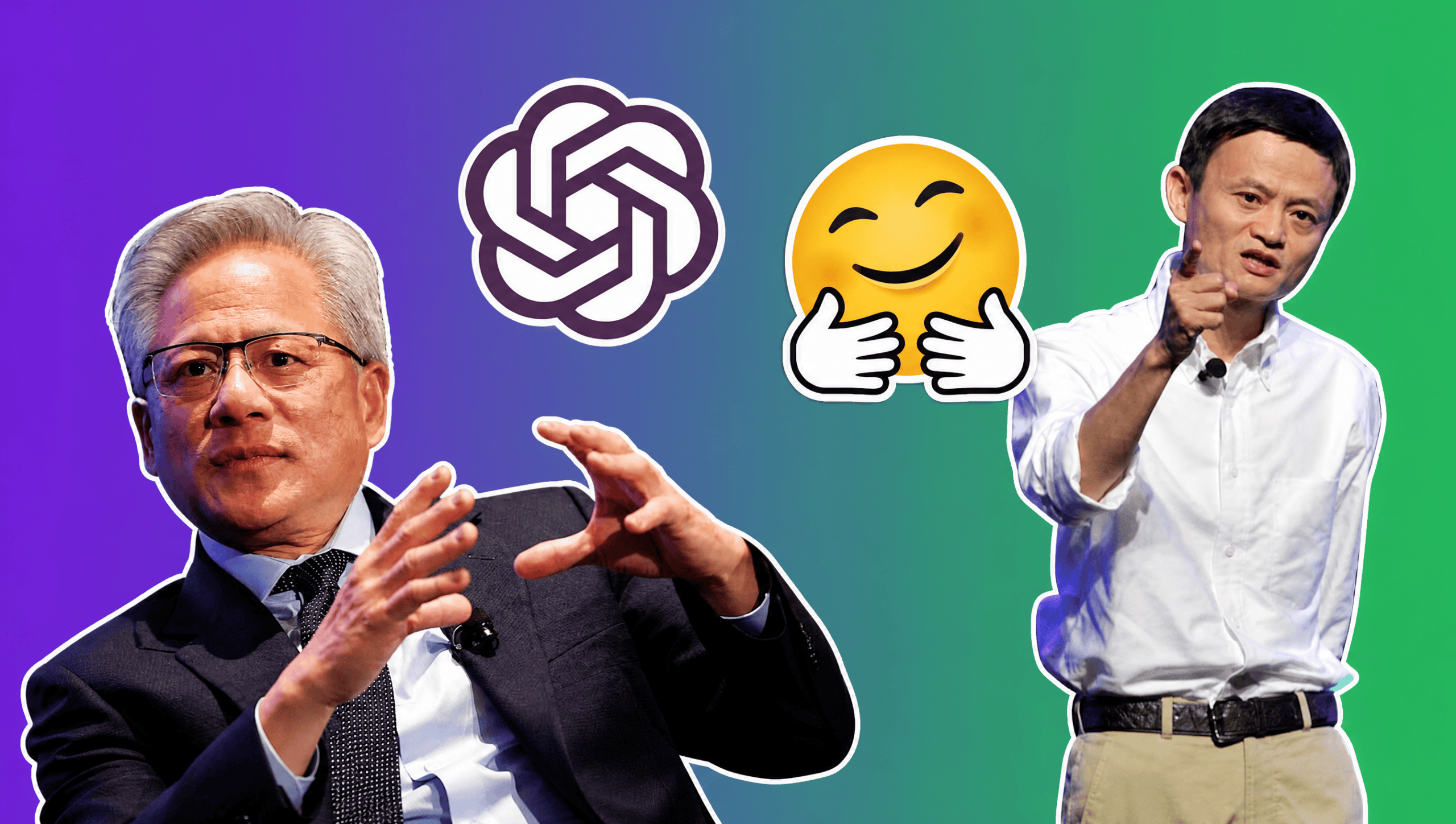
This week OpenAI launched GPT-6 and its president talked about the AGI era, while the rest of the industry starts to feel worn out by too many models. We filtered the noise down to the five moves that actually matter.
I’ve filtered out the noise for you
The best of this week in AI, summarized and noise-free.
1. OpenAI’s new AI can do your work now, not just chat
OpenAI launched GPT-6 Astra, its new frontier model, which reaches corporate customers first. It can complete computer tasks, create documents, and write code. Its president, Greg Brockman, described it as a generational leap that could eventually be seen as the arrival of artificial general intelligence, and closed the briefing by saying welcome to the AGI era.
A model that runs full computer tasks stops being an assistant that answers questions and becomes something that does the work. For sales and operations teams, that means being able to hand off entire workflows without depending on a technical team.
2. Nvidia just bought a huge piece of AI. Here’s why you should care
Nvidia agreed to buy Hugging Face, the central platform for open-source AI models, for around 12.9 billion dollars. It is one of the largest acquisitions in Nvidia’s history and its biggest bet on software yet. The company promised to keep the platform open and neutral across providers.
Hugging Face is where much of the open AI ecosystem lives, the one many companies use to build their own tools. Putting it in the hands of the most powerful chipmaker in the world changes who controls the price of, and the access to, that infrastructure.
3. Investors are betting $47 billion that AI will do your job
Cognition AI, the maker of Devin (billed as the first autonomous software engineer), is closing a round of around 1 billion dollars. That investment would push its valuation to about 47 billion, nearly double the 26 billion it was worth just three months ago. The company reportedly drew close to 10 billion in investor interest.
Capital is betting hard on agents that do complete work on their own, not assistants that only suggest. It is the clearest sign yet that automation of complex tasks is coming soon to areas beyond coding, including sales and operations.
4. Why you should stop chasing every new AI model
The pace of launches sped up so much that AI companies in the United States and China ship new models almost every week. Google, for example, put out three versions of its Flash model in just six weeks. The industry itself admits that this pace wears out users and buyers.
Keeping up with every announcement became impossible and, more importantly, unnecessary. For a business team, chasing every release costs time and attention without improving results. Picking one or two tools per use case and mastering them beats trying everything.
5. The AI giant you’re not watching just won big
Alibaba’s early bets on AI and chips are paying off in a big way. Its stake in memory maker CXMT reached a value near 19 billion dollars after the company went public, a return of up to 17 times. Its investment in Zhipu AI also soared, with the stock climbing around 1,500% so far this year.
Alibaba is positioning itself as the player that combines models, cloud, and chips in China, something like putting Nvidia and OpenAI under one roof. If your business operates or sells in Asia, its ecosystem will be harder and harder to ignore when you choose providers.
Bonus: Content of the Week
The full interview from the announcement of Nvidia’s acquisition of Hugging Face, where the leaders explain what changes and what they promise to keep open.


