
 English


 Español
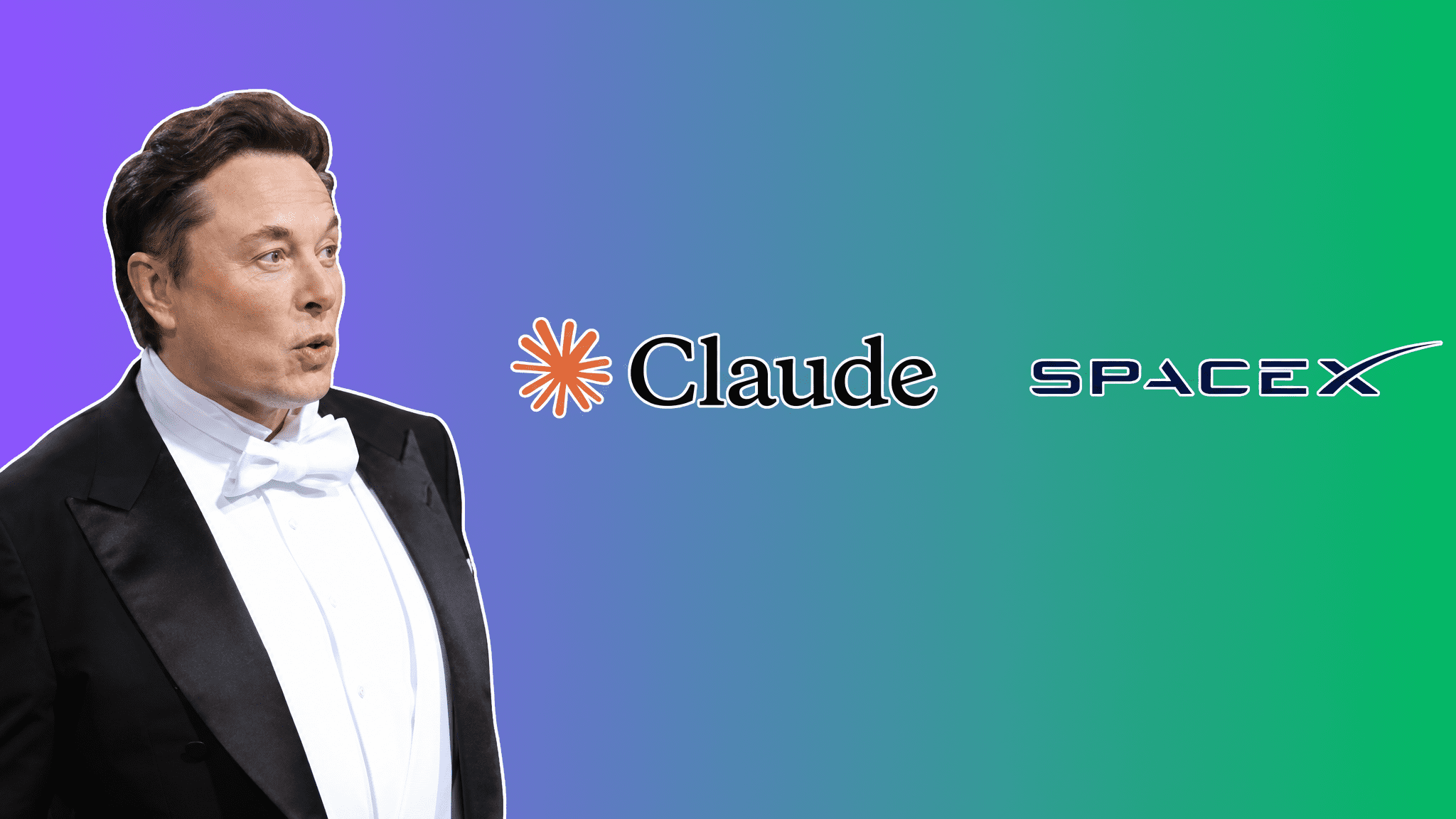
Anthropic has signed an agreement with SpaceX to use the full capacity of Colossus 1, the compute cluster widely described as the largest AI supercomputer in the world, with more than 220,000 Nvidia GPUs powering Claude inference workloads starting this month. The deal adds more than 300 megawatts of new compute to Anthropic’s stack, and the contract reportedly extends to a longer-term exploration of gigawatt-scale compute capacity in space, an idea SpaceX has been floating publicly since late 2025.
For Anthropic, the timing is everything. The company spent the first quarter of 2026 throttling usage limits on Claude Pro, Claude Max, and Claude Code subscribers as inference demand outpaced its multi-cloud capacity. The Colossus deal lets Anthropic immediately raise those limits and address the gap that had been pushing developer customers toward competing models. For SpaceX, the deal lands weeks before its planned IPO at a target valuation of up to $2 trillion, giving the company a high-visibility AI customer logo just as it approaches the public markets.
The strategic context is what makes the deal striking. Elon Musk has spent the past two years publicly criticizing Anthropic, including its safety positioning and constitutional AI approach, while building xAI and the Grok model line as direct competitors to Claude. SpaceX, which Musk also leads, was originally not seen as a likely vendor for Anthropic compute precisely because of this rivalry. Yet by 2026, the economics of frontier AI infrastructure have made traditional competitive lines irrelevant. Compute is the only resource that genuinely matters at frontier scale, and Anthropic was willing to pay any provider that could deliver 220,000 GPUs at meaningful contract pricing.
The supply side is also instructive. Colossus 1 was originally built to train xAI’s own Grok models, and the leasing of its full capacity to Anthropic suggests SpaceX has determined that earning compute revenue from a competing lab is more valuable than reserving the cluster for first-party use. That decision is a leading indicator that even hyperscale-class compute owners are choosing to monetize their fleets externally rather than absorb the cost of training their own foundation models full-time.
The space compute angle is more speculative but worth noting. SpaceX has demonstrated multiple proof-of-concept Starlink-attached compute payloads since 2025, and the Anthropic agreement reportedly includes a research budget to explore whether a low-Earth-orbit GPU cluster could be operationally cost-competitive with terrestrial facilities. The thesis is that orbital compute would have unlimited solar power and natural cooling, two of the largest cost lines for ground-based data centers. Whether this becomes a real product is years away, but the fact that a frontier lab is paying SpaceX to investigate it places the topic firmly inside mainstream AI infrastructure planning.
For LATAM and global enterprise buyers, the deal has practical implications. Anthropic’s previous capacity constraints had been a procurement risk for buyers standardizing on Claude for production workloads. With 300 megawatts of new capacity coming online this month, that risk drops substantially, and Claude Pro, Max, and Code customers should see usage limit increases reflected in their plans during May. Buyers evaluating multi-model AI strategies can also recalibrate their assumptions about Anthropic’s long-term scale, which had been a quiet concern relative to OpenAI’s Microsoft-backed compute footprint.

The deal also signals the current state of the AI infrastructure market. Hyperscaler-tier compute is now treated as a fungible commodity that flows toward whichever lab can pay, regardless of competitive positioning between the lab’s products and the compute owner’s own AI ambitions. Microsoft hosts OpenAI alongside Anthropic and Mistral. AWS hosts Anthropic alongside its own Trainium-trained models. Now SpaceX hosts Anthropic alongside xAI’s Grok. The pattern is consistent: at frontier scale, no compute provider can afford to be exclusive, and no lab can afford to be ideologically pure about who runs its workloads.
The era of binary AI alliances is over. What remains is a market where the labs with the best models and the deepest capital pools can rent any GPU on the planet, including from people who have publicly called them dangerous. That is a much healthier market for buyers than the old model, but it makes long-term competitive analysis substantially more complicated. The next year of AI procurement decisions will be shaped by whichever labs can sustain inference at scale, and the Colossus deal makes Anthropic a much stronger contender on that axis than it was a week ago.


