


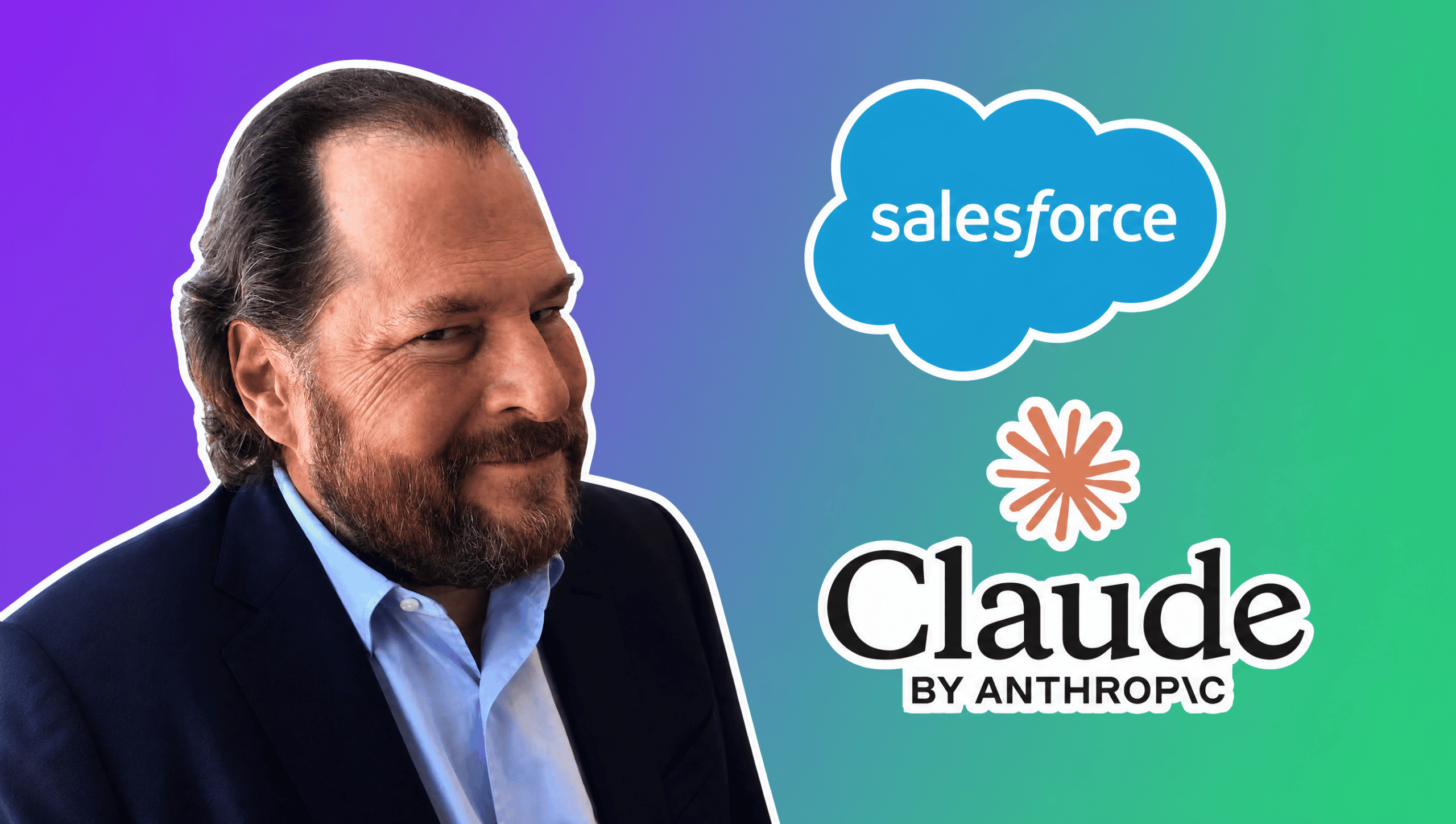
Salesforce and Anthropic just reshaped enterprise AI with a partnership called Claudeforce, and it makes Claude the default reasoning model across the tools millions of teams already use every day. Announced on August 26, 2026, the deal lands Claude inside Agentforce and Slack, plugs Salesforce directly into Claude, and arrived on the same day Salesforce reported a record quarter. Investors noticed: the company’s stock jumped roughly 23% as the alliance became public. For anyone running sales, service, or operations on Salesforce, this is the moment AI stopped being a separate app and became part of the system of record.
What Claudeforce actually ships
The partnership moves in three directions at once. First, Claude becomes a default model inside Agentforce, serving as a reasoning engine for the Atlas Reasoning Engine and powering Agentforce Vibes and Agentforce Coworker, with availability in Agent Builder for teams that build their own agents. Second, Claude becomes the default model for Slack AI, Slackbot, and Salesforce’s own internal engineering tools, which means the assistant answering questions in your channels is now running on Claude. Third, and most interesting for sellers, Salesforce ships as a plugin inside Claude with 37 prebuilt sales skills, so a rep can run meeting prep, deal-health reviews, and pipeline updates by reasoning over live CRM data without ever leaving the Claude window.
That third piece is available to select pilot customers now, with an open beta expected in September 2026. The direction is clear: whether you start in Slack, in Agentforce, or in Claude itself, you end up reasoning over the same Salesforce data with the same model.
Why the default model matters
For years the enterprise pitch was model-agnostic: pick whatever model you like, swap it out later, stay neutral. Claudeforce signals the end of that era for Salesforce customers. When one model becomes the default across the CRM, the collaboration layer, and the agent builder, it stops being a swappable component and becomes the reasoning fabric your workflows are tuned to. That has real upside for you. Instead of bolting a chatbot onto the side of your CRM, the intelligence lives where the data already is: drafting follow-up emails, summarizing account history, flagging at-risk deals, and executing multi-step tasks inside the tools your team never leaves.
Security is the other half of the story. Through Amazon Bedrock, Claude runs inside the Salesforce Trust Boundary, which lets customers in regulated industries deploy domain-specific AI while keeping their data and AI workloads contained. For companies that have been cautious about sending CRM data to an outside model, keeping everything inside the trust boundary removes one of the biggest blockers to adoption.
The money behind the move
This is not a light integration. Salesforce plans to spend roughly 300 million dollars on Anthropic tokens in 2026 alone, on top of an existing 300 million dollar equity stake in the company. That level of commitment tells you Salesforce is not hedging. Marc Benioff has a long track record of reading platform shifts early, and the groundwork was visible months ago when Salesforce launched a fully headless mode that lets teams use the entire platform without the graphical interface. A headless platform is exactly what an agent needs to operate, and Claudeforce is the payoff: the model reasons, the agent acts, and the interface becomes optional.
The takeaway for your business is practical. If your team lives in Salesforce or Slack, expect Claude-powered features to show up in your daily flow over the coming months, and expect the bar for what an assistant should do to rise from answering questions to completing tasks. The companies that win the agentic era will be the ones whose data and workflows are ready for a model to act on, not just chat about. Claudeforce is the clearest sign yet that the largest software vendors are betting their roadmaps on exactly that.


