


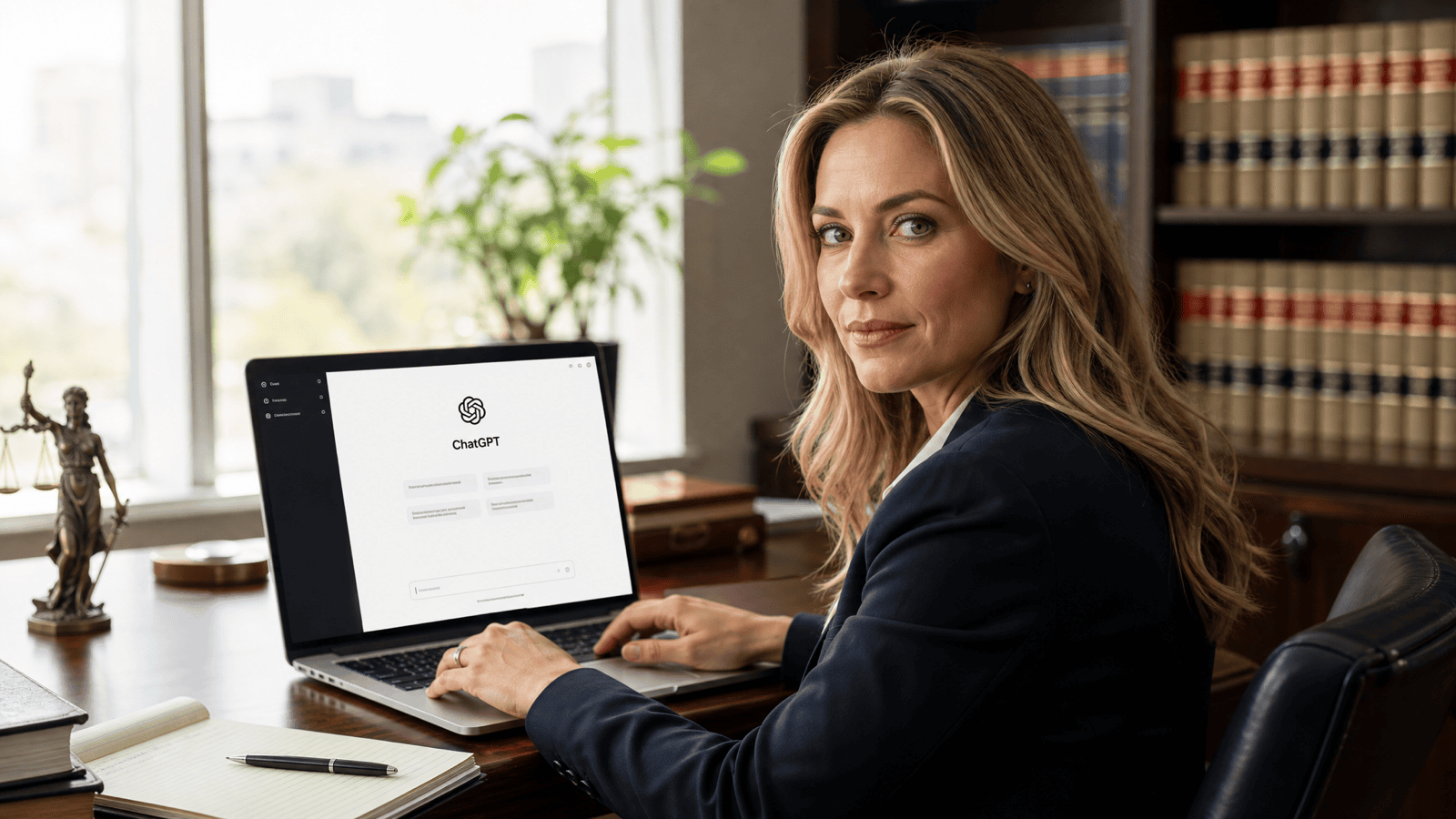
ChatGPT will not try your case. It cannot read a jury or cross-examine a witness. What it can do is take the busywork off your desk. From intake notes to demand-letter outlines, the right prompt turns an hour of drafting into a few minutes of review. That is the promise of these ChatGPT prompts for lawyers: more time for the work only you can do.
Personal injury firms run on volume and speed. You field new leads, review medical records, chase documents, and write demand letters, all at once. These 15 ChatGPT prompts for lawyers target the repetitive steps in that pipeline. Copy a prompt, swap the brackets, and let the draft come to you.
One caveat up front. Every prompt below produces a draft, not a filing. You are still the attorney. So read the next section before you paste anything, because how you use these tools matters as much as the prompts themselves.
How to use these ChatGPT prompts for lawyers (and a disclaimer)
These prompts are drafting aids. They speed up the first version so you can focus on judgment, strategy, and advocacy. Use them well, and they save real hours. Use them carelessly, and they create risk. So follow three rules.
First, swap every bracketed placeholder with your real details before you run a prompt. The output is only as specific as your input. Second, always have an attorney review the AI output before it reaches a client, a court, or opposing counsel. ChatGPT drafts; you decide. Third, never paste privileged or confidential client data into a public AI tool. Treat these prompts as ways to draft language and structure, not as a place to store case facts.
For the parts that touch real client data, such as intake and follow-ups, use a secure, purpose-built system instead of a public chatbot. A Dapta AI agent can run intake and reminders in a controlled environment, which we cover below. With that settled, here are the 15 ChatGPT prompts for lawyers, grouped by where they help most.
What makes a strong ChatGPT prompt for legal work
The quality of the output tracks the quality of the prompt. A vague request gives you a vague draft. So before you run any of the ChatGPT prompts for lawyers below, keep three habits in mind.
Be specific. Name the accident type, the phase of the case, and the audience. For example, a demand-letter prompt works better when you specify the jurisdiction and the injury. The more context you give, the less you rewrite.
Assign a role and a format. Tell the model who it is writing as and how to structure the answer. A prompt like “act as a paralegal and return a bulleted timeline” beats a plain question. Because the format is set, the draft drops straight into your workflow.
Constrain the tone and the limits. Ask for plain English, a firm tone, or a word count. Also tell it what to avoid, such as guarantees of outcome. Clear guardrails keep the draft compliant and on brand.
Client intake and qualification prompts
Intake sets the tone and decides which cases are worth your time. These prompts help you qualify faster and gather the right facts early.
“Draft 10 intake questions to quickly qualify a personal-injury lead for a [accident type] case.”
Use this to build a consistent screening script your whole team can follow. It keeps every intake thorough, even on a busy day.
“Summarize this intake call into a case-viability snapshot with red flags: [paste notes].”
Turn messy call notes into a clean summary you can scan in seconds. It surfaces the deal-breakers before you invest hours.
“Write a warm, plain-English message telling a prospective client what documents to gather for a [accident type] claim.”
Send this right after intake so clients arrive prepared. Clear instructions early mean fewer delays later.
Case summaries and document review prompts
Records review eats time. These ChatGPT prompts for lawyers compress long documents into usable summaries, so you spot the facts that matter.
“Summarize these medical records into a chronological injury timeline: [paste text].”
A clean timeline is the backbone of any injury case. This prompt drafts one you can verify and refine.
“Turn this police report into a bullet summary of liability facts: [paste text].”
Pull the liability picture out of a dense report in seconds. You still check the source, but the first pass is done.
“Draft a list of follow-up questions a paralegal should ask based on these case notes: [paste notes].”
Close the gaps in a file before they become problems. It gives your paralegal a clear next step.
Client communication prompts
Good communication keeps clients calm and cases moving. These prompts help you write clear, human messages fast.
“Write a reassuring status-update email to a client whose case is in the negotiation phase.”
Clients worry most when they hear nothing. A quick, warm update builds trust and cuts down anxious calls.
“Explain ‘pain and suffering damages’ to a client in simple, non-legal language.”
Translate a hard concept into plain words. Clients who understand their case make better decisions with you.
“Draft a text reminding a client of their upcoming medical appointment and why it matters to the case.”
Missed treatment weakens a claim. A friendly reminder protects both the client’s health and the case record.
Demand letter and negotiation prompts
Demand letters are where drafting time piles up. These ChatGPT prompts for lawyers give you a fast, structured starting point.
“Draft a demand-letter outline for a [accident type] claim, listing sections and the facts each needs.”
Start from a solid skeleton instead of a blank page. You fill in the facts and the argument; the structure is ready.
“Rewrite this demand paragraph to be firmer and more persuasive: [paste paragraph].”
Sharpen a weak paragraph without losing your voice. Compare versions, then keep the language you trust.
“List common adjuster objections to a [accident type] demand and a strong response for each.”
Prepare for pushback before it lands. Walking in with answers ready keeps negotiations on your terms.
Marketing and content prompts
A steady flow of new cases keeps the firm healthy. These prompts help you publish helpful, compliant content faster.
“Write 5 FAQ answers a personal-injury firm can publish about [topic].”
Answer the questions clients actually search for. Useful FAQs build trust and help you get found online.
“Draft a Google Business post explaining what to do in the first 24 hours after a [accident type].”
Show up in local search with genuinely helpful advice. It positions your firm as the calm expert nearby.
“Turn this case result into a compliant, testimonial-style social post (no guarantees of outcome): [paste result].”
Share wins the right way. This prompt keeps the post honest, with no promises about anyone else’s case.
How Dapta automates the parts that touch real clients
Notice a pattern above. The safe, high-value automation lives in intake and follow-ups, exactly where a public chatbot is the wrong tool. That is the gap Dapta fills.
Dapta is a no-code AI agent that answers calls and WhatsApp messages 24/7, in English and Spanish. It qualifies a new personal-injury lead, captures the accident type and urgency, and books the consultation on your calendar. Unlike a public tool, it runs in a controlled environment connected to your CRM, so client details stay in your systems, not in a chatbot’s history.
It also handles the follow-ups that fall through the cracks: appointment reminders, document requests, and status nudges. Your team stops chasing and starts lawyering. So you pair the drafting speed of these ChatGPT prompts for lawyers with an agent that safely runs the client-facing work.
For the full picture, explore our related guides:
- 8 Best AI Answering Services for Immigration Law Firms
- 35 ChatGPT Prompts for Sales That Close More Deals
- AI Software for Law Firms
Frequently asked questions
Is it safe to use ChatGPT for legal work?
Only for drafts, and with care. Use ChatGPT to draft language and structure, then review every word yourself. Never paste privileged or confidential client data into a public tool. For anything that touches real client information, use a secure system built for it.
Will AI replace personal injury attorneys?
No. AI handles the busywork so you focus on lawyering. These ChatGPT prompts for lawyers speed up drafting and review, but judgment, strategy, and advocacy stay with you. The tool assists the attorney; it does not replace one.
Can I automate client intake safely?
Yes, with the right tool. A Dapta AI agent runs intake and follow-ups in a controlled, connected environment, not a public chatbot. It captures the case details, books the consult, and syncs everything to your CRM, so client data stays protected.
Do these prompts guarantee a better case outcome?
No, and be wary of anything that claims otherwise. These prompts save time and sharpen your drafts. They do not decide cases. Outcomes depend on the facts, the law, and your work as the attorney.
Put these ChatGPT prompts for lawyers to work
The best use of AI in a personal injury firm is simple: let it draft, and let it run the repetitive client-facing tasks, so your attorneys spend their hours on strategy. Copy these prompts for the drafting, and let a Dapta agent handle intake and follow-ups securely.


