
 English


 Español
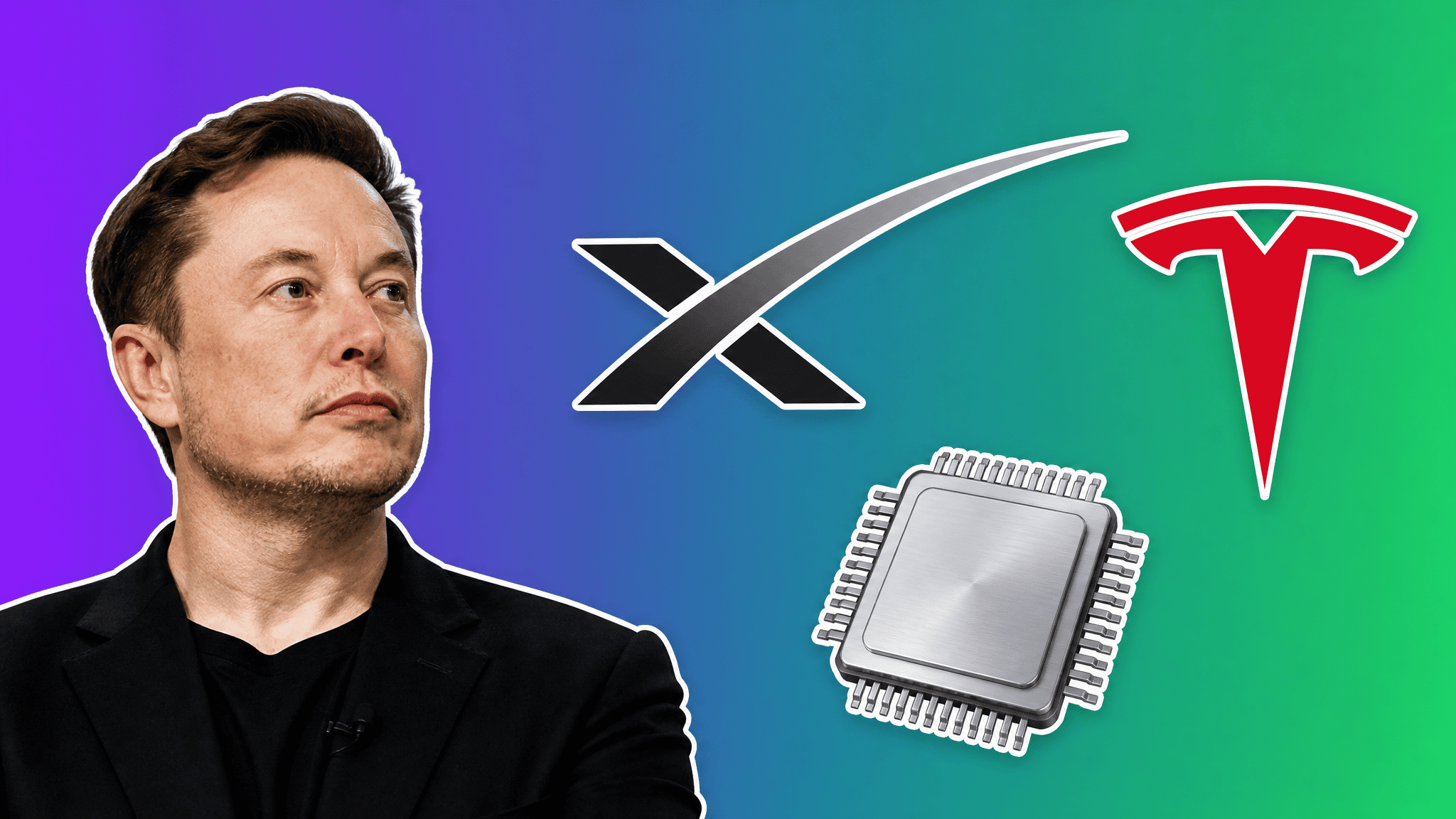
Elon Musk has never been shy about scale, but his latest announcement pushes even his ambitions into new territory. SpaceX and Tesla are teaming up to build Terafab, a semiconductor plant in Texas that Musk says will be the largest building on Earth by a wide margin. The numbers are hard to picture: more than 100 million square feet under one roof, roughly fifty times the size of the Pentagon.
A factory built for the AI era
Terafab will rise in Grimes, Texas, just north of Tesla's existing Giga Texas complex outside Houston. To grasp the scale, consider the current record holders. The Pentagon, long the largest office building in the United States, covers about 6.6 million square feet. China's New Century Global Center, one of the biggest buildings in the world by floor area, spans 18.9 million. Terafab would dwarf both at more than 100 million square feet.
The investment matches the ambition. The initial phase is pegged at roughly US$16.8 billion, with the full proposed build reaching US$55 billion and potentially climbing as high as US$119 billion. The plant is expected to create more than 3,000 jobs. "Terafab Texas will be the largest and most valuable building on Earth by far," Musk wrote. "And it will be stunningly beautiful."
Why Tesla and SpaceX need their own chips
The reason for a project this size comes down to a supply problem. Between them, Tesla and SpaceX need an enormous volume of advanced chips, and Musk has said their combined demand already exceeds projected global supply. Rather than compete for capacity at existing foundries, the two companies are choosing to build their own.
Terafab will handle manufacturing, packaging, and testing of advanced logic and memory chips. Those chips are destined for some of Musk's most compute-hungry projects: Tesla's Optimus humanoid robots, the self-driving Cybercab fleet, and SpaceX's plans for space-based data centers. Each of those efforts depends on custom silicon that can run AI workloads efficiently, and each is constrained today by how many chips the companies can secure.
Building a fab of this size is not a small bet. Semiconductor manufacturing is famously capital-intensive and technically demanding, and even established players face delays and cost overruns. Vertically integrating chip production gives Tesla and SpaceX control over their own roadmap, but it also means taking on one of the hardest problems in modern manufacturing.
What it signals for the industry
Terafab is the clearest sign yet that the biggest AI companies see chip supply, not talent or algorithms, as the real bottleneck. When a company decides it is easier to build the largest factory in human history than to keep buying chips on the open market, the message is that compute has become the scarce resource that everything else depends on.
For the broader market, including manufacturers and technology buyers across LATAM, the trend points in one direction: the companies with the deepest control over their own compute will set the pace for AI. Owning the supply chain, from the silicon up, is becoming a competitive advantage rather than a logistics detail.

Not every business can build a chip fab, but the underlying lesson applies at every scale. The winners in AI are the ones that remove their own bottlenecks instead of waiting for the market to solve them. For most companies, that bottleneck is not silicon, it is the manual work that slows down sales and operations, and the fix is automation that runs on the compute that already exists.
Whether Terafab lives up to Musk's promise of a stunningly beautiful, record-breaking factory remains to be seen. But the ambition alone tells you how high the stakes have climbed in the race to control AI's raw materials.


