 English


 Español
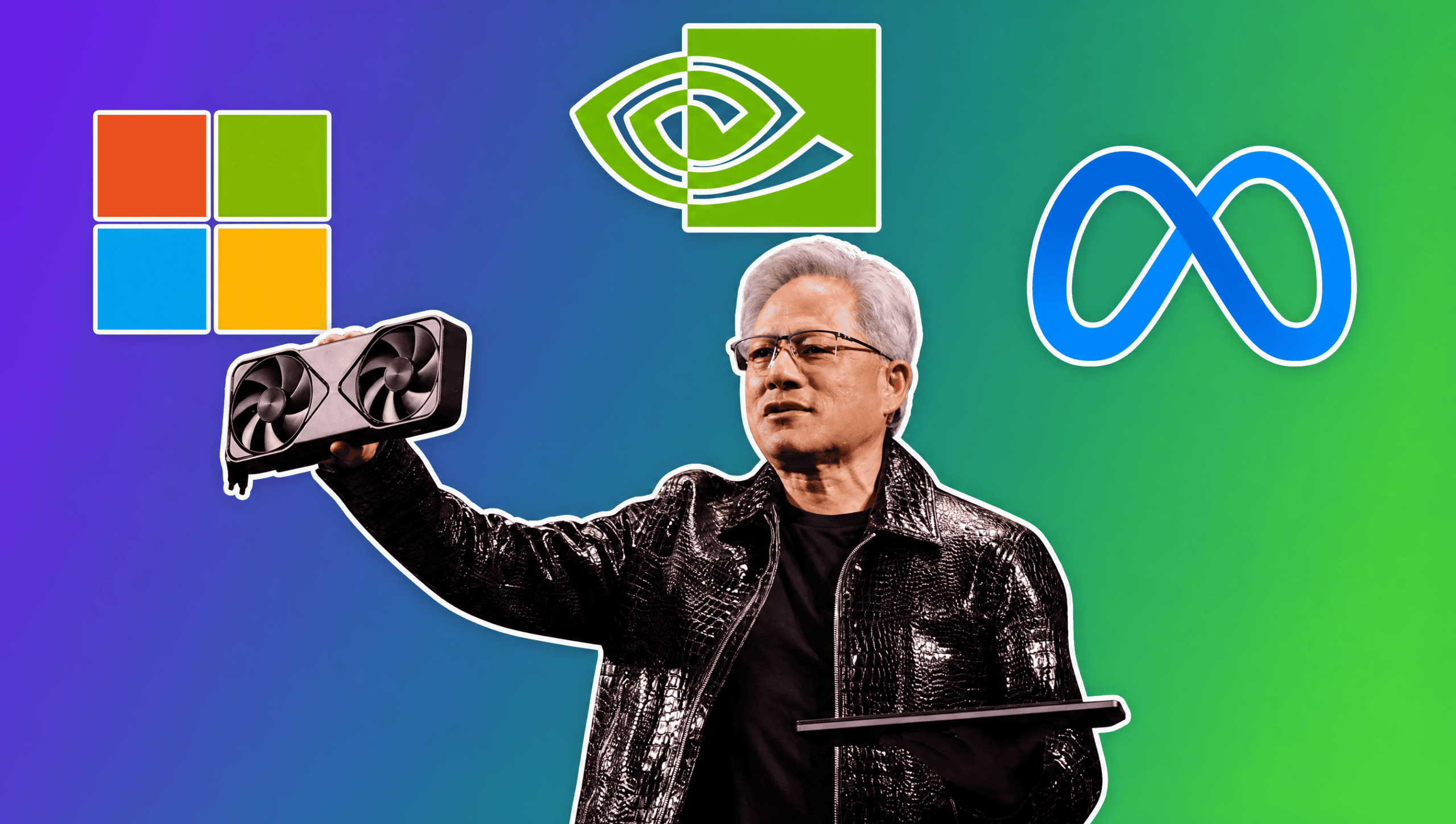
Silicon Valley does not agree on much, but this week more than 20 of its biggest names lined up on the same side. Nvidia, Microsoft, Meta, Dell, Andreessen Horowitz, Palantir and others signed a letter urging Washington to support open-weight AI models, the kind you can download and run yourself. Nvidia CEO Jensen Huang led the public defense, and the timing was no accident.
Open-weight models are the ones whose trained parameters are released for anyone to download, run, and adapt on their own hardware. The coalition’s argument is practical: these models lower costs, widen access, and, they say, actually improve security. The letter went as far as claiming that openness may be one of the most important paths to AI safety.
What the coalition wants
The signatories are asking policymakers not to lock down open models. Their case has three legs. First, cost: a company can run a smaller open model on its own infrastructure for routine work instead of paying for frontier-model access on every call. Second, access: startups, universities, and smaller institutions can build on capable AI without training a model from scratch. Third, control: customers keep ownership of their data and avoid being locked into a single vendor.
On security, the coalition flipped the usual script. Rather than treating openness as a risk, they argued that defenders need tools as capable as attackers have, and that open systems can be inspected, benchmarked, and red-teamed far more thoroughly than closed ones.
Why now
The trigger was China. Chinese open models, most notably the fast-rising Kimi K3, have been closing the gap with American frontier systems, partly by distilling knowledge from them. That has split Washington. The White House science office criticized what it called covert industrial distillation of U.S. technology, while nearly 200 Silicon Valley companies separately urged the administration not to restrict access to cheap Chinese models.
So the letter is really about two fears at once: that heavy-handed rules could hobble American open models, and that if the U.S. steps back from open source, the global default could become someone else’s. For an industry that runs on being the platform everyone builds on, that is an existential worry.
What it means for your business
This fight decides what you will be allowed to build with. Open-weight models that are cheap, private, and runnable inside your own infrastructure are one of the biggest cost and control levers a growing company has. If regulation restricts them, that lever gets shorter. If the open camp wins, you keep the option to run capable AI where your data already lives, on your terms.

For most businesses the appeal of open models is not ideological. It is that they let you keep sensitive data in house, avoid per-call fees that balloon at scale, and tune a model to your own workflows. Those are exactly the properties that make automation affordable past the pilot stage.
When the companies that sell chips, clouds, and enterprise software all agree on something, the reason is usually that their customers, and their own growth, depend on it. This week they decided that the future they want is open. For teams in LATAM and global markets, the takeaway is to watch the rules as closely as the releases: what you can run, and where, is now a policy question.


