


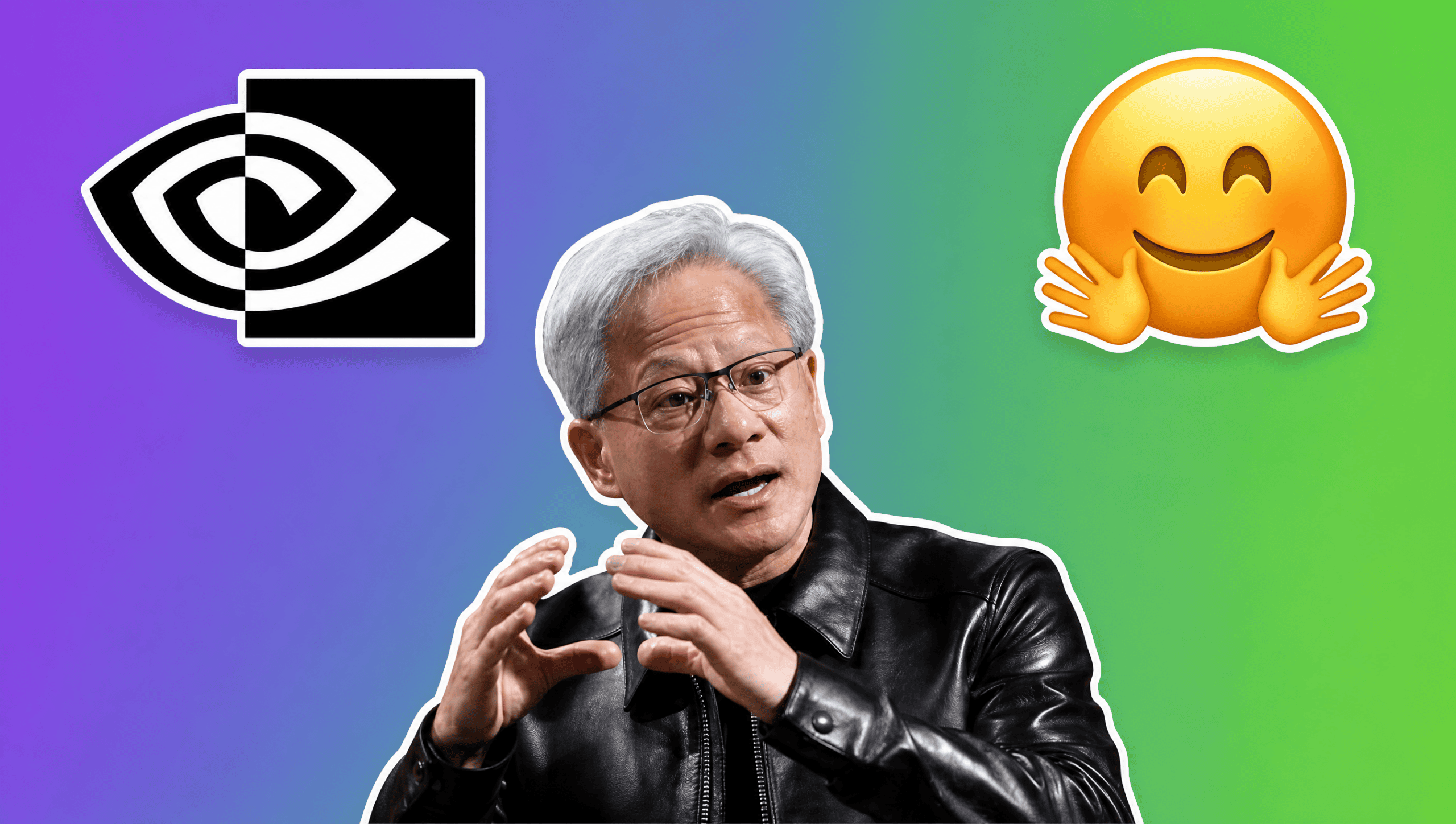
Nvidia is reportedly close to buying Hugging Face for 12.9 billion dollars, a move that would hand the world’s most valuable chipmaker control of the platform where open-source AI actually lives. According to The Information, the deal would turn Nvidia’s existing stake into outright ownership of the site often called the GitHub of AI, a hub used by roughly 13 million developers to build, test, and share open models. If it closes, Nvidia would own not just the hardware that trains models and the software that runs them, but the front door where developers discover them.
Why Hugging Face is worth 12.9 billion dollars
Hugging Face is not a household name, but it is infrastructure. It is where teams publish new open models, download the weights, compare benchmarks, and grab the datasets and libraries that make those models usable. When a new open model drops, whether from Meta, Alibaba, Mistral, or an independent lab, Hugging Face is usually the first place it appears and the place most developers go to try it. That makes it the distribution layer for the entire open-model ecosystem, and distribution is where power concentrates.
For Nvidia, the logic is defensive as much as it is offensive. Open models, and especially the fast-moving Chinese ones, are one of the few real threats to Nvidia’s position, because they lower the cost of AI and shift value away from raw compute. By owning the place where those models are discovered and downloaded, Nvidia protects itself in both directions: if closed models win, it still sells the chips, and if open models win, it owns the marketplace they flow through. Nvidia already sold the shovels in the AI gold rush; buying Hugging Face is like buying the map.
The antitrust problem
The deal is far from done. A transaction this size triggers a mandatory Hart-Scott-Rodino filing in the United States, which means Nvidia has to notify the Federal Trade Commission and the Department of Justice and wait out a review period before closing. The European Union, where Nvidia already faces active inquiries over how it allocates GPU supply, is expected to open its own review.
What makes this deal different from Nvidia’s recent moves is that it cannot be dressed up as something smaller. Over the past couple of years Nvidia structured many of its deals as technology licenses and investments rather than acquisitions, a framing that arguably let it sidestep premerger notification rules. A straight 12.9 billion dollar purchase of Hugging Face offers no such cover. Regulators will see it for exactly what it is, and it may become the biggest test yet of whether authorities will let Nvidia extend its chip dominance into the software layer sitting on top of those chips. Analysts expect the review to be slow, with a close unlikely before mid-2027 at the earliest.
What it means for your business
In the near term, nothing changes: Hugging Face keeps operating, and the open models you rely on stay available. The longer-term question is concentration. If one company owns the chips, the core software, and the distribution hub, the open ecosystem that has kept AI costs falling could tilt toward a single gatekeeper. For teams building on open models, that is worth watching, because the price and availability of the tools you depend on may increasingly run through one provider’s decisions. The upside is that tighter integration between Nvidia’s hardware and Hugging Face’s catalog could make ready-to-use models faster and cheaper to deploy. The risk is that the same integration hands one company the keys to the whole road.


