



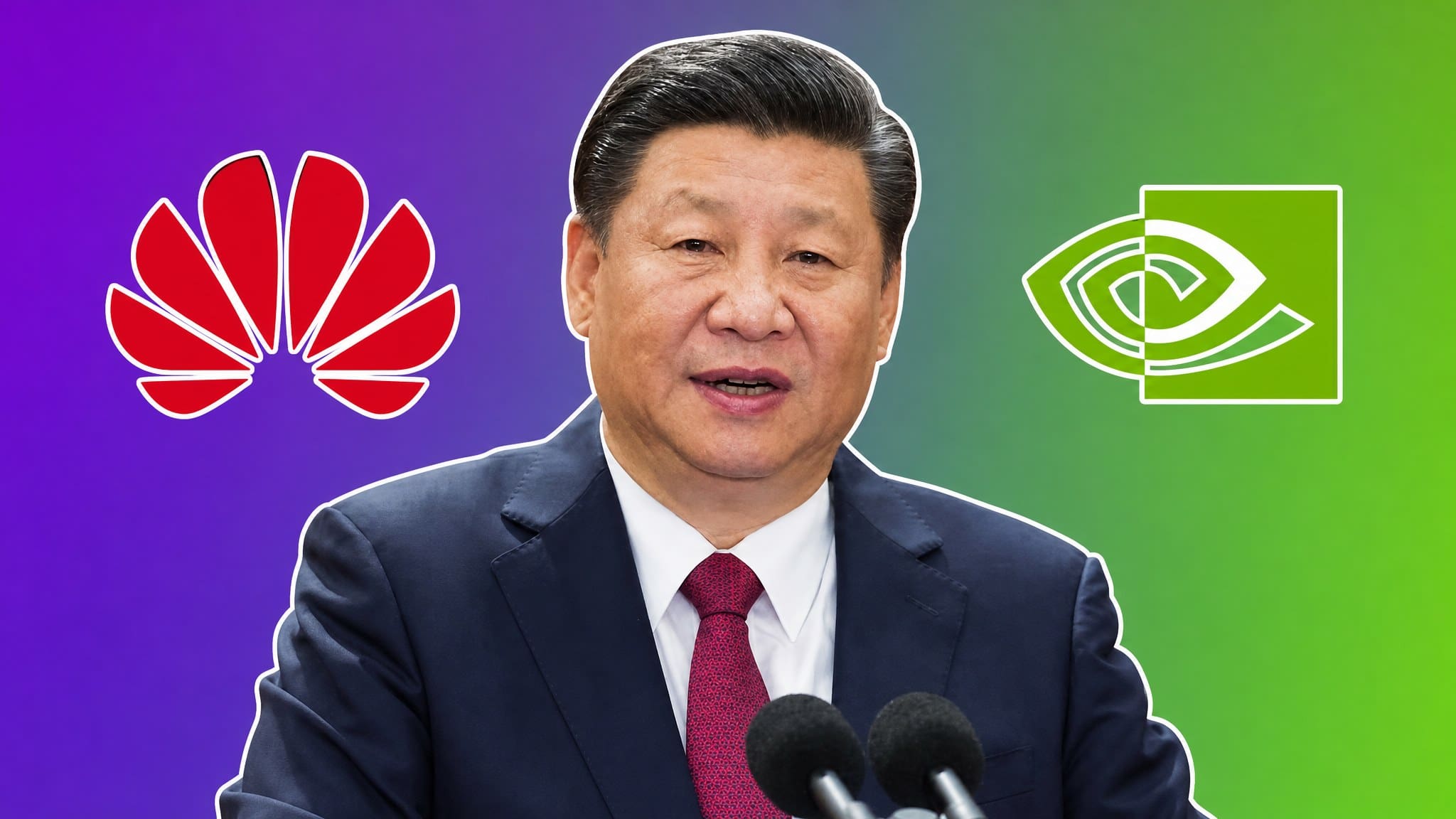
Nvidia has spent the AI boom in a position almost no company ever reaches: nearly every serious AI system in the world runs on its chips, and buyers line up months in advance to pay premium prices. This month, the first credible crack in that dominance came from an unexpected place. Huawei, the Chinese technology giant, laid out an aggressive chip roadmap designed to chase Nvidia directly, and the timing was anything but accidental.
What Huawei announced
At an event in Shanghai, Huawei revealed its AI chip plans in detail, including the Atlas 960 system and a new generation of Ascend processors. The company pulled the launch of its flagship Ascend 960DT chip forward to the first quarter of 2027, with a second version, the 960PR, following later in the year. The new chips are designed to double the compute power, memory, and interconnect capacity of the previous 950 series.
Just as telling was what Huawei admitted about demand. The company said orders for its AI chips already exceed what it can produce, which is limiting international sales and pushing up prices on scarce components. In other words, the problem is not finding customers. It is making enough chips to satisfy them.
Huawei's strategy is not simply to match Nvidia on raw single-chip speed. It is focusing on connecting huge numbers of processors together. Its SuperPoD system links up to 4,096 chips using light-based wiring called UnifiedBus, which cuts the delays and power waste that pile up when thousands of chips have to talk to each other. For the enormous AI workloads that big companies run, how well chips cooperate at scale can matter more than how fast any single one is.
Why the timing matters
The announcement landed just before trade talks between Xi Jinping and Donald Trump, and that context is hard to ignore. For China, reducing its dependence on American chips is a national priority, and Huawei is the clearest symbol of that push. A homegrown alternative to Nvidia is not only a business story; it is a geopolitical one.
There is a familiar pattern here. Whenever a lower-cost competitor from China gains ground, calls for tariffs and regulation tend to follow in the United States, partly to protect domestic champions from open competition. The same debate is now forming around AI chips.
What it means for you
You may never buy an AI chip, but the price of compute quietly sets the price of nearly every AI product you use. When one supplier has no real rival, it can charge what it likes, and those costs flow through to the tools your business pays for. Real competition at the chip level is one of the few forces that can push those costs down across the board.
The practical takeaway is not to bet on Huawei versus Nvidia, but to expect the cost of AI to keep falling as more players enter the market. That trend rewards companies that are ready to use more AI as it gets cheaper, rather than treating today's prices as fixed. The teams that win will be the ones with the workflows in place to absorb cheaper, faster compute the moment it arrives.
Nvidia is not losing its crown this year. Its lead in software and ecosystem is enormous, and a 2027 launch is still a long way off. But for the first time in the AI era, a serious challenger has a real roadmap and more demand than it can handle. The grip is not broken. For the first time, though, you can see where it might loosen.


