


When a rival’s product gets good enough, the argument tends to shift. It stops being about whose technology is better and starts being about whose technology is allowed. That is exactly what is happening with Kimi K3, the open-weight model from Chinese startup Moonshot AI that has Silicon Valley nervous and Washington reaching for sanctions.
What Kimi K3 is and why it matters
Kimi K3 is the largest open-source model released so far, with 2.8 trillion parameters. More important than its size is its performance: independent testing shows it closing the gap with frontier models including Anthropic’s Fable 5 and OpenAI’s GPT-5.6 Sol, and even surpassing them on some benchmarks. It is also reportedly 2 to 3 times easier to run than comparable frontier systems, which matters enormously for anyone deploying AI at scale.
Because the weights are open, any developer or company in the world can download Kimi K3 and run it for free. Testers have highlighted its strength at finding software bugs, a capability with obvious value for engineering teams. For a Chinese lab to ship an open model that matches the best closed American systems, and to do it cheaper to run, is precisely the scenario US policymakers have been dreading.
Washington’s accusations
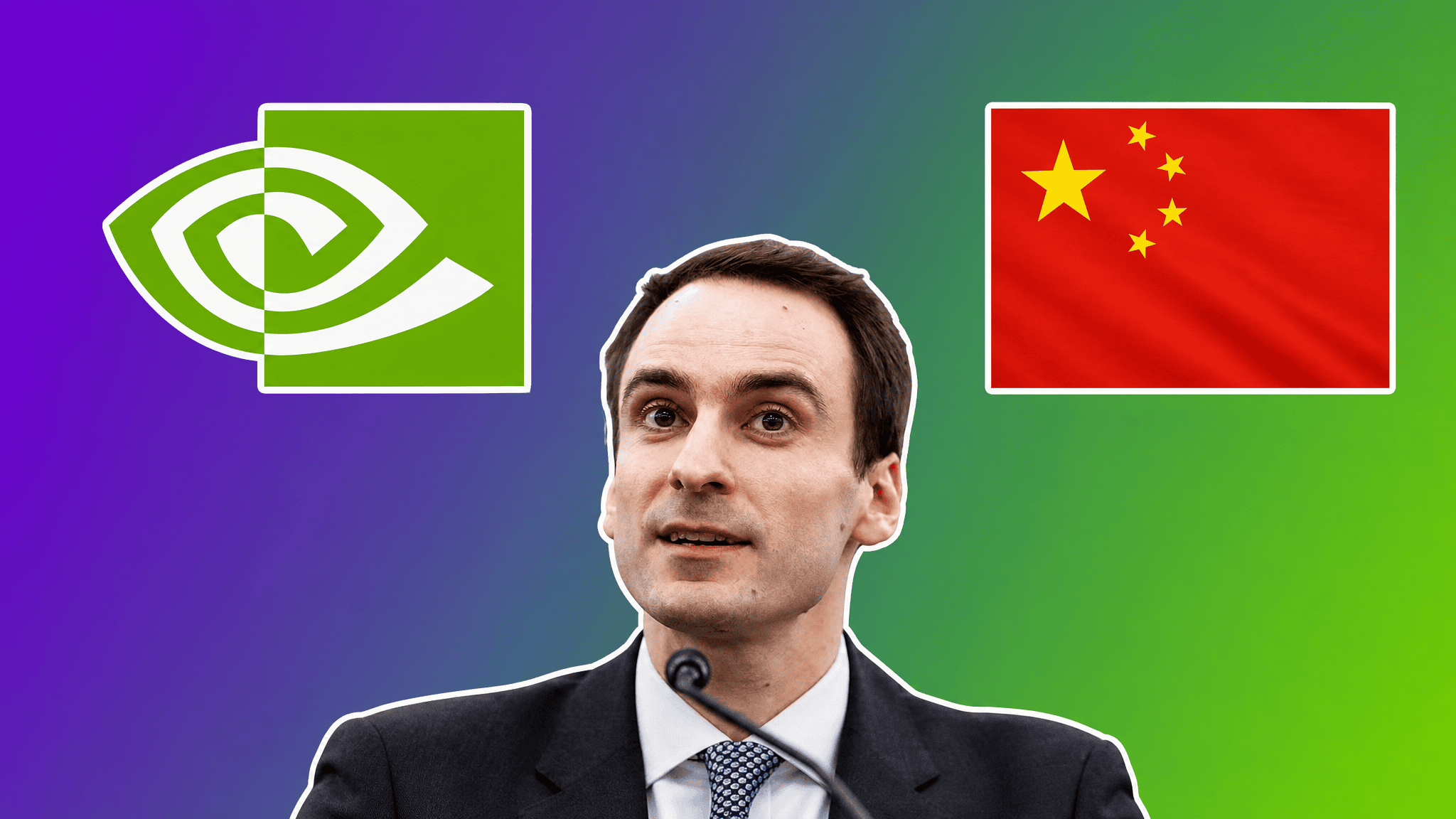
The US response was not to compete on benchmarks. Michael Kratsios, the White House science and technology adviser, accused Moonshot of distilling Anthropic’s Fable model to build Kimi K3, alleging the company developed a sophisticated internal platform to run large-scale distillation against US models while switching between multiple access methods to avoid detection. Distillation, in this context, means training your own model on the outputs of someone else’s, effectively copying its intelligence without its data or compute.
Officials also allege Moonshot reached restricted Nvidia GB300 servers located in Thailand. The GB300 contains Nvidia’s most advanced Blackwell chips, which are not permitted for sale to China. The Treasury has now raised the prospect of sanctions and Entity List designations against Chinese AI firms, which would sharply escalate the confrontation.
When better becomes illegal
The subtext is hard to miss. When the debate moves from my model is better to your model is illegal, it usually signals that the technical lead is narrowing. Accusations of distillation and chip smuggling may well be accurate, but they also function as a way to slow a competitor that is catching up on the merits.

For businesses, the practical lesson is about resilience, not politics. The AI supply chain is now a geopolitical battlefield, and the model you build on today could be caught in an export fight, a sanctions action, or a licensing dispute tomorrow. That is a real argument for avoiding deep lock-in to any single model or provider, and for building your AI workflows on a layer that lets you swap the underlying model as the landscape shifts.
The broader signal is that open-weight models are now good enough to matter at the level of national policy. When a downloadable model triggers talk of sanctions, you know the technology has crossed from novelty into infrastructure. For companies, the winners will be the ones who stay flexible enough to use the best available model without betting the business on any one of them.


