


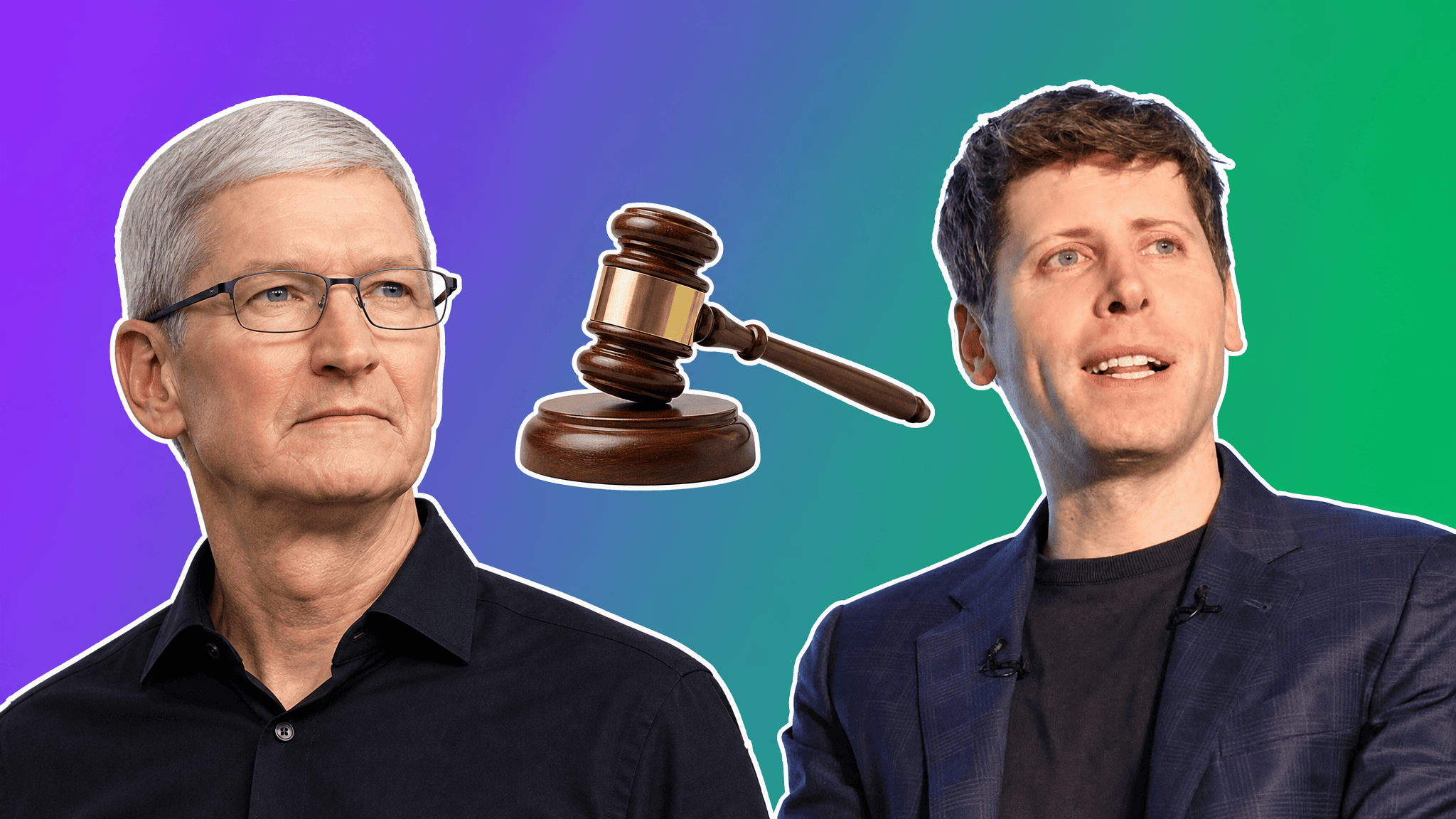
Apple just took OpenAI to court. The company sued OpenAI and two of its own former employees, alleging theft of trade secrets. On its own, a trade-secret lawsuit between two tech giants is routine. The timing is what makes this one matter: the suit lands exactly as OpenAI prepares to launch its first hardware device, stepping onto turf Apple has ruled for nearly two decades.
What the lawsuit claims
Apple’s complaint targets OpenAI and two former Apple employees who, it alleges, took confidential information with them. Trade-secret cases usually center on people moving between rival companies and carrying knowledge they should not. The details will play out in court, but the shape of the claim is familiar: Apple says something proprietary walked out the door and landed at a competitor that is about to compete with Apple directly.
Why the timing is everything
A week earlier, news leaked that OpenAI’s first device, a screenless smart speaker designed with Jony Ive, is coming in late 2026. For years OpenAI and Apple were uneasy partners, with Apple even routing some of its AI features through OpenAI. Now OpenAI is building hardware, the one thing Apple has always owned outright. The lawsuit reads less like a fight over a specific secret and more like a territorial warning. Apple is not suing for a payout, it is drawing a line before a new rival plants a flag on its home ground.
What it means for your business
The headline fight is between two giants, but the underlying lesson is broadly useful: as AI companies expand from software into hardware, devices, and physical products, they start colliding with incumbents who never saw them as competitors before. Partnerships flip into rivalries fast. For any business, it is a reminder that today’s vendor or partner can become tomorrow’s competitor the moment your ambitions overlap.

There is also a talent-and-trust angle worth noting. Trade-secret suits often follow employees moving between rivals, which is a normal part of a hot industry, but it raises the stakes on how companies handle sensitive knowledge. As AI talent moves quickly between labs and startups, expect more of these disputes, and more scrutiny on what leaves with people when they go.
Apple does not usually sue over pride. It sues when someone gets too close to territory it intends to keep. OpenAI just got that close.


