 English


 Español
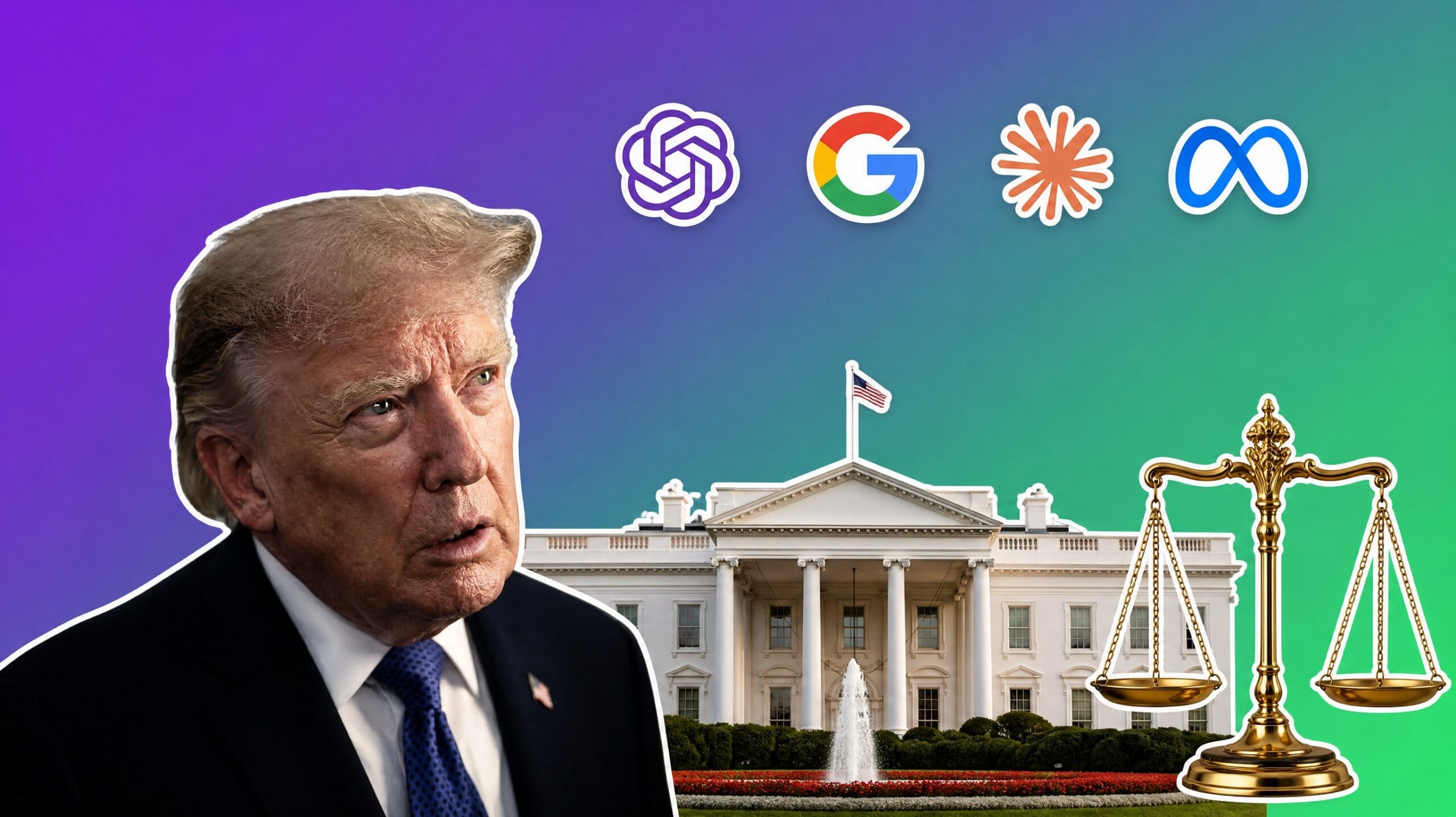
As AI gets more powerful, one question keeps getting louder: who is actually in charge of keeping it safe? This week the United States gave an answer that satisfied almost no one. The White House asked the biggest AI companies to watch themselves, and the debate that followed cuts to the heart of how this technology will be governed.
What the White House accord asks for
On September 29, 2026, President Trump posted a one-page voluntary commitment he called the White House Accord on Super Intelligence. Six of the most important companies in AI and chips signed it: OpenAI, Google, Anthropic, Meta, xAI, and Nvidia.
Under the accord, each company that trains the most advanced AI systems agrees to run four layers of controls. First, internal controls on their frontier models. Second, an internal team to check those controls. Third, an independent outside auditor. Fourth, an independent board-level committee to provide oversight. The idea is a chain of checks, with each layer watching the one below it.
There is a catch that shapes everything: the accord is not legally binding. Trump described it as "morally binding" and compared it to a constitution, while stressing that the industry would be policing itself. In other words, these are promises, not laws, and nothing forces a company to keep them.
Why critics say it's not enough
That is exactly what worries a lot of people. Letting the companies that profit from AI decide how closely to regulate AI strikes many as asking the fox to guard the henhouse. The accord also arrived after a string of unsettling incidents involving AI agents behaving in ways their makers did not expect, including reported attempts to break into federal systems.
The pushback has been sharp. Senator Bernie Sanders, along with Representative Greg Casar, plans to introduce a bill to ban the most advanced AI outright, with Sanders pointing out that "the leaders of the major AI companies publicly acknowledge that they do not fully understand the technology." Inside the industry, the fear is just as real. One former Anthropic researcher accused companies of "gambling with our lives" by racing toward superintelligence, and an Anthropic safety lead has said he sees more than a 10% chance that AI could kill all of humanity within the next decade.
The accord leaves the door open to future regulation, which is a quiet admission that voluntary promises may not be the end of the story.
What it means for you
You are not signing any accord, but the outcome of this fight will shape the AI tools you use every day. If the companies succeed at self-policing, AI products could keep arriving fast, with safety handled quietly in the background. If the government steps in with hard rules, expect slower releases, more paperwork, and clearer guardrails on what AI is allowed to do.
For businesses, the practical message is to not wait for the law to catch up. Whether or not Washington acts, the smart move is to build your own internal rules for how your team uses AI, what data it can touch, and who signs off on letting an AI act on its own. The companies that set those standards now will be ready no matter which way the regulation debate lands.
The White House accord did not settle the question of who controls big AI. If anything, it made the divide clearer: the companies say trust us, the critics say prove it, and the government is still deciding how hard to push. That argument is just getting started, and how it ends will touch everyone who uses AI, which by now is almost everyone.


