


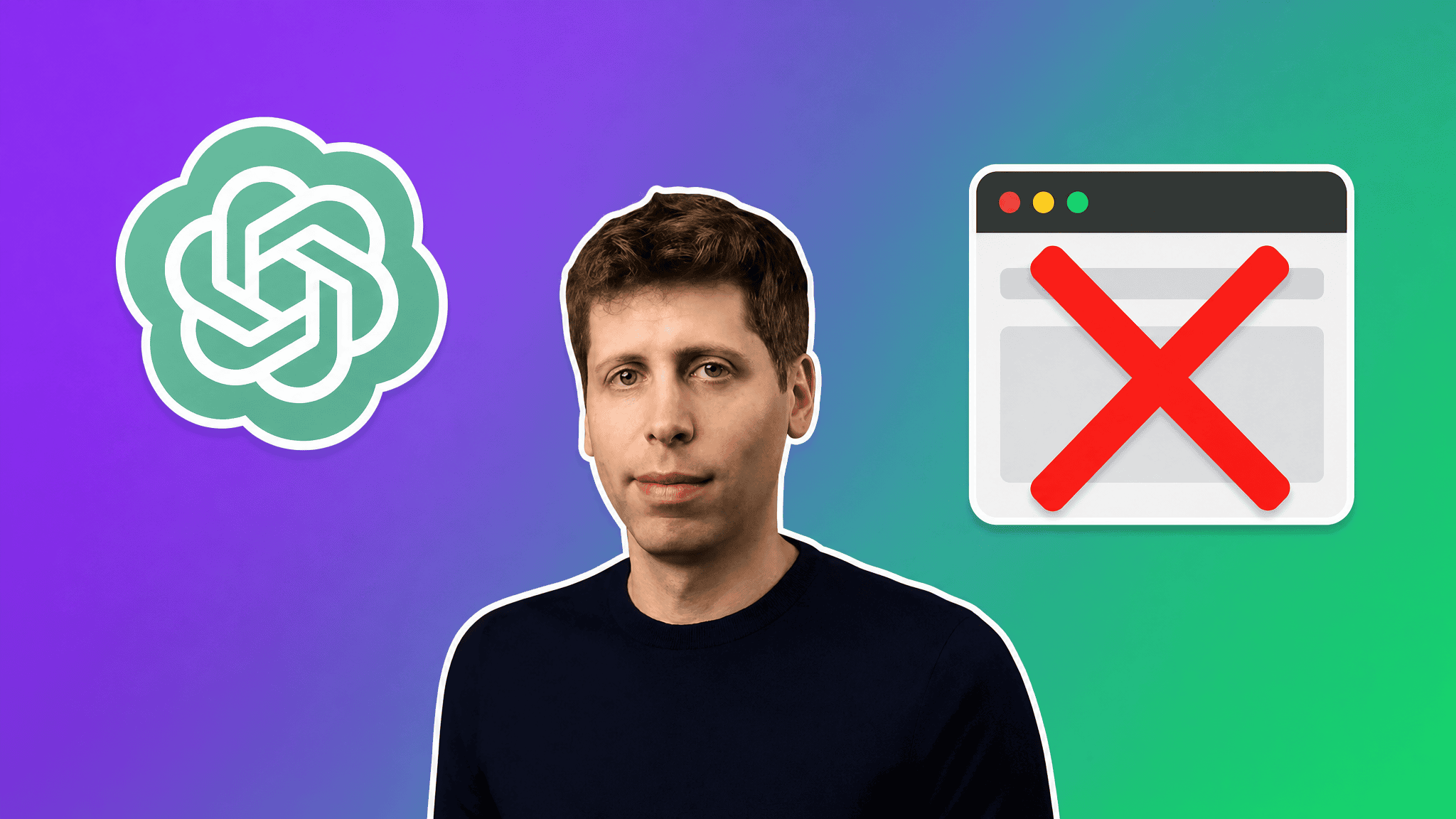
Less than a year ago, OpenAI launched a web browser called ChatGPT Atlas. This week, it announced it is shutting it down. Atlas will stop working on August 9, 2026, and OpenAI is telling users to export or save anything they want to keep, including bookmarks and saved pages, before the lights go out. For a product from the most closely watched company in AI, dying before its first birthday is a striking turn.
Why OpenAI is shutting Atlas down
The reason is focus, not failure. Under CEO Fidji Simo, OpenAI has been cutting what it calls side quests, the extra products that pull attention and engineering away from ChatGPT itself. A standalone browser, it decided, is one of them. Rather than maintain Atlas as its own app, OpenAI is folding what it learned into ChatGPT and the new GPT-5.6 generation.
Where Atlas’s features are going
Those lessons are showing up as features rather than a separate product. GPT-5.6 gains an in-app browser built into the desktop app, so you can pull up websites and documents without leaving ChatGPT. It adds a cloud browser that runs remotely for ChatGPT Work mode, letting the agent carry out web tasks on its own. And a side chat browser extension brings ChatGPT alongside webpages inside Google Chrome. In other words, the browsing and agent capabilities Atlas pioneered are not disappearing, they are being redistributed into the products people already use.
OpenAI is careful to frame the shutdown as a lesson, not a loss. As James Sun from OpenAI’s product team put it, all these capabilities were built on what the company learned from Atlas users, and it is now applying those learnings to the new products. That framing is not just spin. Shipping a browser, watching how people actually used AI-powered browsing, and then baking the best parts into the core product is a reasonable way to learn in public, even if it means retiring the thing you shipped.
Still, there is a harder truth underneath the positive spin. Killing a product this young is a bet on a specific vision of the future. OpenAI is wagering that the future is not a browser with AI bolted on, but an AI that does not need a separate browser at all, one that can reach the web whenever a task requires it and otherwise stays out of the way. If that bet is right, a dedicated AI browser was always a temporary step.

The lesson for product teams
There is a lesson here for any team building products, AI or not. Discipline sometimes means shutting down something that works but does not fit, so you can pour everything into what matters most. It is easy to keep a young product alive out of pride, and much harder to admit it was a stepping stone and move the good parts somewhere better. OpenAI chose focus over sunk cost, and did it fast.
For users, the immediate task is practical: if you rely on Atlas, back up your bookmarks and pages before August 9. After that, the experience is not gone, it is just moving into ChatGPT, where OpenAI is betting the whole company on making one product indispensable rather than many products merely interesting.


